Ever had a night where the kitchen feels like a battlefield and you’re left with a pot of bland noodles? That was me last Tuesday, staring at two packets of instant ramen and a half‑filled bottle of milk, feeling like a culinary disaster was imminent. I stared at the bland white noodles, the faint hiss of the boiling pot, and the empty pantry. Then a thought struck: what if I could turn that sad bowl into a creamy, cheesy masterpiece that would make even the most skeptical foodie swoon? I was about to find out.
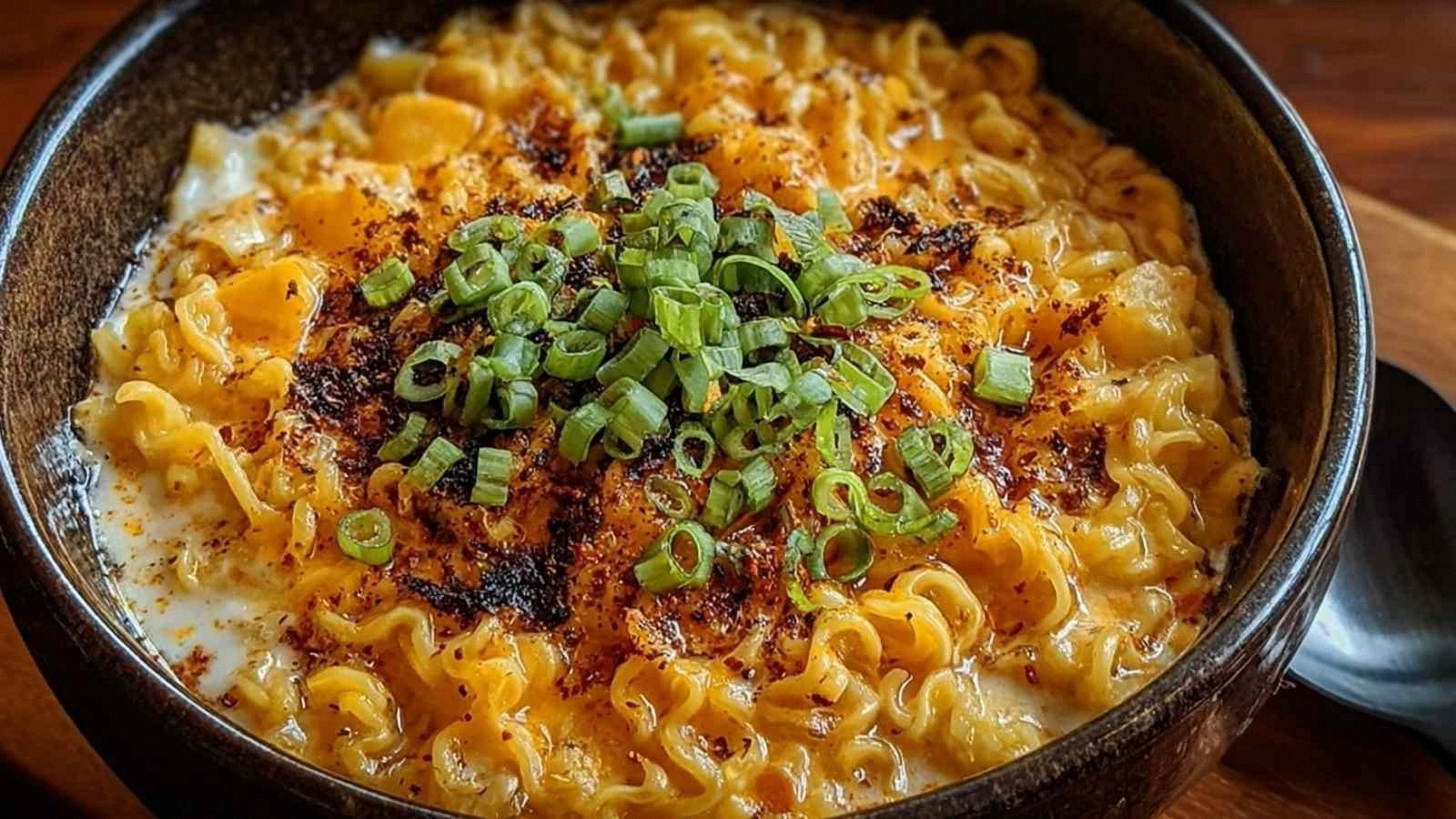
Imagine the first bite: a warm, velvety sauce coating each noodle like a silky blanket, the sharp cheddar melting into a golden cascade, the cream cheese adding that luscious, buttery richness that makes the broth sing. The aroma rises like a comforting hug, with subtle hints of garlic powder and onion powder dancing in the air, while the butter sizzles and releases a nutty fragrance that makes your mouth water. The crunch of freshly sliced green onions offers a bright contrast, and a pinch of crushed red pepper flakes throws a playful heat that lingers on the tongue. The texture is a harmonious blend of tender noodles, silky sauce, and a gentle snap from the green onions, creating a symphony in every mouthful. I could almost hear the satisfying slurp that signals the first true moment of culinary triumph.
This isn’t just another cheesy ramen; it’s a flavor explosion that redefines comfort food. The secret lies in the dual‑cheese blend, where sharp cheddar delivers depth and cream cheese provides silky smoothness, creating a sauce that clings to noodles like a second skin. The low‑sodium broth keeps the dish light yet savory, while the butter adds a luxurious sheen. The precise balance of spices—garlic, onion, pepper, and a subtle salt—ensures every bite is a well‑rounded melody. Most recipes get this completely wrong, over‑cooking the noodles or drowning them in heavy sauce; this version preserves the noodle integrity while delivering a decadent coating that feels indulgent without being cloying. I dare you to taste this and not go back for seconds.
Now, let’s talk about the trick that turns a simple bowl into a show‑stopper: the “double‑simmer” technique that infuses the broth with cheese and turns it into a silky sauce that coats every strand. Picture yourself pulling this out of the pot, the whole kitchen smelling incredible, and the noodles shimmering in a golden, cheese‑laden glaze. I promise you, by the end of this guide you’ll wonder how you ever made it any other way. Let me walk you through every single step—by the end, you'll wonder how you ever made it any other way.
What Makes This Version Stand Out
- Cheese Harmony: The combination of sharp cheddar and cream cheese creates a sauce that is both tangy and velvety, giving depth without heaviness. The cheddar melts into a golden cascade while the cream cheese smooths the texture, resulting in a coating that clings to each noodle. This balance ensures every bite is rich yet balanced.
- Low‑Sodium Broth: Using a low‑sodium broth keeps the dish light and lets the cheese shine without overwhelming saltiness. It also allows you to control the salt level precisely, preventing the noodles from becoming overly salty. This subtle base elevates the overall flavor profile.
- Double‑Simmer Technique: Simmering the broth and cheese together creates a silky sauce that coats the noodles like velvet. This method ensures the cheese fully integrates, preventing clumps and giving a smooth mouthfeel. It’s a game‑changer for achieving that creamy texture.
- Quick Prep: All ingredients are ready in minutes, making this dish a perfect weeknight winner. No pre‑soaking or complex prep; just boil, stir, and serve. The speed doesn’t compromise flavor, proving convenience can coexist with indulgence.
- Texture Contrast: Fresh green onions and a sprinkle of crushed red pepper add crunch and heat, breaking the creamy monotony. The green onion’s bright snap provides a refreshing bite, while the pepper offers a gentle kick. Together they elevate the dish beyond pure cheese.
- Make‑Ahead Friendly: This ramen can be prepared ahead, stored in the fridge, and reheated without losing its creamy allure. The sauce thickens slightly upon cooling, making it even richer when reheated. It’s a practical solution for busy schedules.
Alright, let's break down exactly what goes into this masterpiece...
Inside the Ingredient List
The Flavor Base
Low‑sodium chicken or vegetable broth is the canvas that brings everything together. It offers a subtle savory backdrop that lets the cheeses shine without overpowering them. If you skip the broth, the dish loses its depth, becoming a flat, cheese‑only affair. Swap for homemade broth for an extra layer of flavor, or use a low‑sodium bouillon cube if you’re in a hurry. The key to a bright, clean broth is to avoid too much salt; you’ll add that later.
Garlic powder, onion powder, and black pepper are the aromatic trio that awakens the senses. They’re easy to measure and distribute evenly throughout the sauce. Omitting any of them will result in a one‑dimensional flavor profile. If you prefer a fresher taste, use minced garlic and onion instead, but be sure to sauté them until golden to avoid raw bite.
Butter is the secret to that glossy sheen and nutty undertone that makes the sauce feel indulgent. It also helps the cheese melt smoothly, preventing clumps. A pinch of salt ties all the flavors together, but because we’re using low‑sodium broth, the amount is minimal. If you’re watching sodium, consider a low‑sodium salt or a dash of sea salt to taste.
The Texture Crew
Instant ramen noodles are the star of the show, providing the chewy, comforting base. They’re quick to cook, which keeps the dish fast and convenient. If you want a healthier twist, swap for whole‑wheat or soba noodles, but keep an eye on cooking time to avoid over‑softening.
Sharp cheddar cheese delivers the tangy punch and a robust flavor that cuts through the creaminess. It’s the main reason this dish feels like a decadent comfort meal. If you can’t find sharp cheddar, a mix of sharp cheddar and Gruyère works well, but the flavor profile will shift slightly. Remember, the cheddar should be shredded finely so it melts quickly.
Cream cheese brings silky smoothness and a subtle tang that balances the sharpness of cheddar. It’s the glue that holds the sauce together. If you’re lactose intolerant, try a dairy‑free cream cheese; just be aware the texture might be a touch different. The key is to melt it gently so it blends seamlessly with the broth.
Milk adds body and helps the cheeses dissolve into a cohesive sauce. It also dilutes the broth slightly, creating a velvety consistency. Whole milk gives a richer texture, while skim milk keeps it lighter. If you’re avoiding dairy, a splash of oat or almond milk can substitute, though the flavor will be more neutral.
The Unexpected Star
Green onions provide a bright, crisp contrast that cuts through the richness. Their mild onion flavor adds freshness without overpowering the cheese. If you don’t have green onions, scallions or even thinly sliced red onion can work, but the texture will differ.
Crushed red pepper flakes introduce a subtle heat that lingers on the palate. They’re optional but add a layer of excitement that keeps the dish from feeling too mellow. If you prefer a milder version, reduce the amount or omit entirely.
Everything's prepped? Good. Let's get into the real action...
The Method — Step by Step
- Heat a large saucepan over medium‑high heat and pour in the low‑sodium broth. As the liquid begins to simmer, add the butter, garlic powder, onion powder, black pepper, and a dash of salt. Watch the butter melt into a golden swirl, releasing a buttery aroma that signals the base is ready. The broth should be just shy of a rolling boil; this prevents the noodles from becoming mushy. Keep an eye on the pot, as the spices will start to bloom and fill the kitchen with savory perfume.
- Add the ramen noodles to the pot, breaking them apart if necessary to ensure even cooking. Stir gently to prevent sticking and let them simmer for 3 to 4 minutes until al dente. The noodles should feel firm to the bite, not rubbery. This timing is critical; overcooking will ruin the texture that makes the dish so satisfying. Keep the pot uncovered to allow the sauce to reduce slightly, concentrating the flavors.
- While the noodles are cooking, melt the cream cheese in a small saucepan over low heat, adding milk in a slow, steady stream. Stir constantly until the mixture is smooth and glossy, with no lumps. This step ensures the cheese integrates seamlessly into the broth. If the mixture becomes too thick, add a splash more milk to reach a pourable consistency. The goal is a silky sauce that coats the noodles like velvet.
- Drain the noodles, reserving a splash of the cooking liquid, and return them to the pot. Pour the melted cream cheese mixture over the noodles, stirring vigorously to coat each strand. The sauce should cling to the noodles, creating a uniform, glossy coat. If the sauce appears thin, add a bit of the reserved broth to thicken. This is the moment where the dish transforms from simple noodles to a creamy masterpiece.
- Add the shredded cheddar cheese and stir until it’s fully melted and incorporated. Keep the heat low to avoid scorching the cheese; you want a smooth, even melt. Watch for that golden sheen that signals the sauce is ready. If any cheese clumps form, gently break them with a spoon. This step is crucial for achieving that silky, buttery texture that makes the dish unforgettable.
- Fold in the chopped green onions and crushed red pepper flakes, allowing the flavors to mingle for a minute. The green onions bring a fresh crunch, while the pepper adds a subtle heat that lingers on the tongue. Taste the sauce and adjust seasoning if needed; a pinch more salt can brighten the flavors. This final touch elevates the dish from comforting to downright indulgent.
- Turn off the heat and let the ramen rest for a minute. This resting period allows the flavors to meld and the sauce to set slightly, creating a richer mouthfeel. The noodles will feel even more tender after this brief pause. It’s a small step that makes a big difference in the overall experience.
- Serve hot, garnishing with extra green onions or a sprinkle of cheddar if you’re feeling extra indulgent. The dish is best enjoyed immediately, when the sauce is at its peak creaminess. If you’re plating for a crowd, consider adding a drizzle of truffle oil for an extra layer of luxury. Remember, this is the moment to showcase your culinary confidence.
Remember, the sauce should be thick enough to coat the noodles but still pourable. If it’s too thick, add a splash of broth or milk to reach the desired consistency.
That's it — you did it. But hold on, I've got a few more tricks that'll take this to another level...
Insider Tricks for Flawless Results
The Temperature Rule Nobody Follows
Many chefs believe that higher heat always cooks faster, but with this dish, low and steady wins the race. Keep the simmer at a gentle bubble to prevent the cheese from scorching and to allow the flavors to develop fully. A quick test: if the sauce starts to separate or a film forms on the surface, lower the heat immediately. This subtle temperature control ensures a silky, cohesive sauce that coats the noodles perfectly.
Why Your Nose Knows Best
Smell is the most reliable indicator of readiness. When the sauce begins to emit a nutty, buttery aroma, it’s a sign that the butter has fully incorporated and the cheese is melting smoothly. Trust your nose; if the scent feels off or underdeveloped, give it a few more minutes. This sensory cue saves you from overcooking and guarantees a dish that smells as good as it tastes.
The 5‑Minute Rest That Changes Everything
After turning off the heat, let the ramen sit for exactly five minutes. This brief rest allows the sauce to thicken slightly, giving the noodles a richer coating. During this time, the flavors mingle, and the cheese settles into a velvety consistency. It’s a simple trick that elevates the dish from good to unforgettable.
The Right Spoon Matters
Use a wide, flat spoon or a ladle when stirring the sauce. A wide surface area prevents the cheese from clumping and distributes heat evenly. A narrow spoon can trap heat, causing the cheese to burn at the edges. This small tool choice can make the difference between a smooth sauce and a lumpy mess.
How to Keep Noodles from Sticking
Right after draining, toss the noodles with a teaspoon of butter or a splash of oil. This coating creates a barrier that keeps them from clumping together. If you’re cooking for a crowd, keep the noodles warm on a low‑heat plate until serving. The result is perfectly separated strands that soak up the sauce beautifully.
The Final Finish
Finish with a drizzle of melted butter or a pinch of grated Parmesan for an extra layer of richness. This final flourish adds a glossy sheen and a burst of umami that completes the dish. If you’re feeling adventurous, a few drops of sesame oil can introduce a nutty undertone that pairs wonderfully with the cheese.
Creative Twists and Variations
This recipe is a playground. Here are some of my favorite ways to switch things up:
Spicy Sriracha Kick
Swirl in a tablespoon of sriracha during the cheese melt for a bold, fiery edge. The heat complements the creaminess and adds a smoky undertone. Pair with a squeeze of lime for a fresh finish.
Mexican Street Tacos Twist
Replace green onions with chopped cilantro and add a handful of corn kernels for a sweet crunch. Finish with a sprinkle of cotija cheese and a squeeze of fresh lime. The result feels like a taco bowl, but with the comforting hug of ramen.
Vegan Creamy Delight
Use dairy‑free cheddar, plant‑based cream cheese, and oat milk. The texture remains silky, and the flavor stays bold. Add nutritional yeast for a savory, cheesy note that’s completely plant‑based.
Protein‑Packed Chicken Addition
Sauté diced chicken breast until golden and fold it in during the final stir. The protein adds substance and turns the dish into a full meal. Season the chicken with paprika and garlic powder for extra depth.
Mediterranean Herb Infusion
Swap the red pepper flakes for dried oregano and add a handful of chopped sun‑dried tomatoes. The herbs bring a fragrant, earthy note that pairs beautifully with the cheese. Finish with a drizzle of olive oil for a silky finish.
Breakfast‑Style Ramen
Top the finished dish with a fried egg, a sprinkle of chives, and a dash of hot sauce. The egg yolk adds richness, while the chives bring a fresh bite. This version is perfect for brunch or a late‑night craving.
Storing and Bringing It Back to Life
Fridge Storage
Store leftovers in an airtight container for up to three days. Keep the sauce slightly thicker by letting the noodles cool before sealing. When you’re ready, reheat gently to avoid over‑cooking.
Freezer Friendly
Freeze in a freezer‑safe container for up to two weeks. Thaw overnight in the refrigerator before reheating. The sauce may separate slightly; a quick stir will restore its silky texture.
Best Reheating Method
Reheat on the stovetop over low heat, adding a splash of milk or broth to loosen the sauce. Stir until heated through and silky again. A quick microwave burst can also work, but keep the heat low to prevent the cheese from separating.