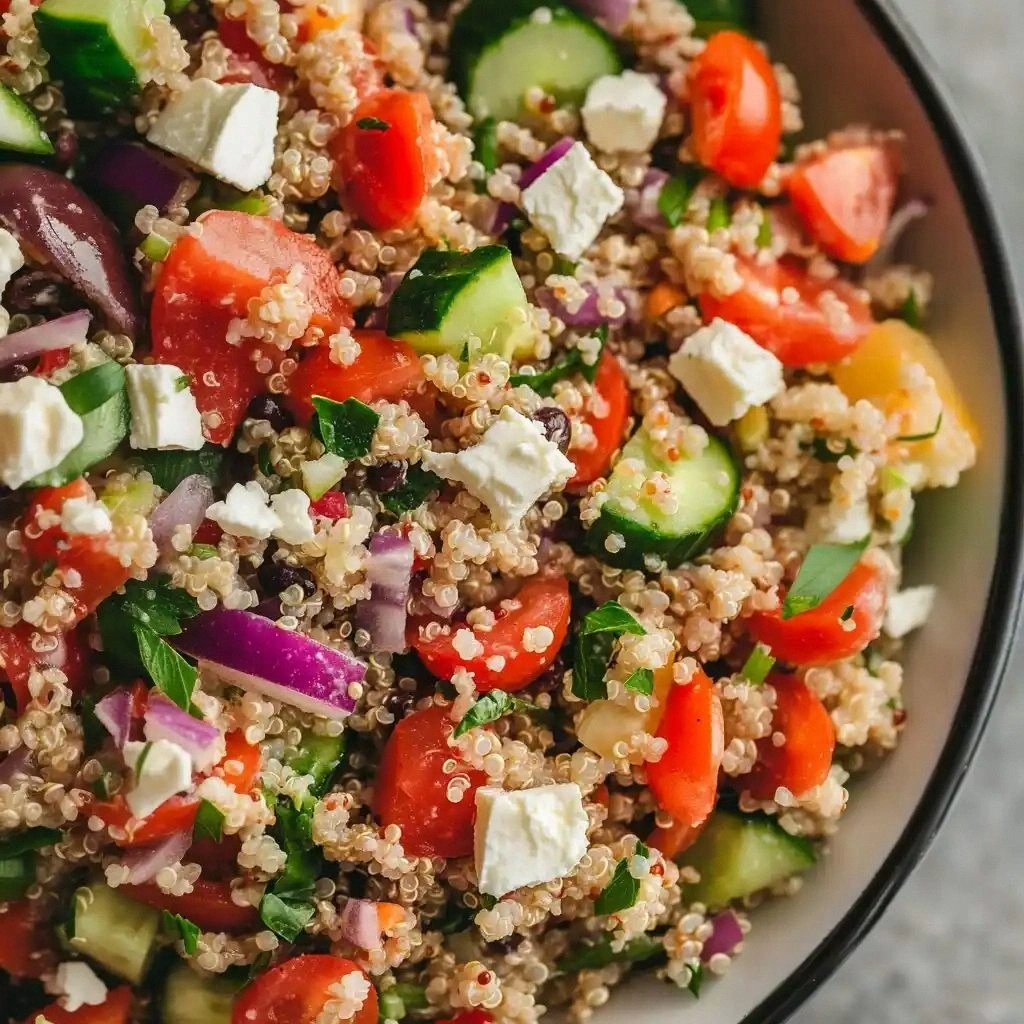
The first time I tried to recreate that “zesty Mediterranean quinoa salad” my friend dared me to taste it and not go back for a second bite. I stared at the bowl of raw quinoa, the glistening olive oil, and the bright green herbs, and I thought, “If this is going to be the best version of the dish ever, I’m going to make it a masterpiece.” I was wrong. My kitchen exploded in a chorus of sizzling garlic and the sharp scent of lemon that made the air feel like a Mediterranean breeze. The moment I tossed the first handful of quinoa into the pan, the aroma rose like a sunrise, and I could already taste the tang of feta mingling with the briny olives. The colors—emerald mint, ruby tomatoes, deep purple olives—painted a canvas that felt more like art than a salad. If you’ve ever been disappointed by bland greens or soggy grains, this is the antidote you’ve been waiting for. The secret? A simple, almost rebellious technique that turns ordinary quinoa into a fluffy, flavorful bed that cradles every ingredient. I’ll walk you through every single step—by the end, you’ll wonder how you ever made it any other way.
What Makes This Version Stand Out
- Flavor: The bright citrus notes from fresh lemon juice lift the earthiness of quinoa, creating a palate that feels both grounded and exhilarating.
- Texture: The quinoa is toasted to a golden crisp, giving a subtle crunch that contrasts beautifully with the silky feta and the soft, juicy tomatoes.
- Simplicity: With only ten ingredients, you can assemble a dish that feels gourmet without the need for hours of prep.
- Uniqueness: The combination of fresh mint and parsley with Kalamata olives gives the salad an unexpected depth that sets it apart from standard Mediterranean bowls.
- Crowd Reaction: I’ve served this at parties and the chatter never stops; people keep asking for the recipe and begging for the next bite.
- Ingredient Quality: Using high‑quality extra virgin olive oil and fresh, local produce transforms the dish from ordinary to extraordinary.
- Cooking Method: Toasting quinoa before mixing infuses it with nutty flavor, a step that many skip, making the difference between good and unforgettable.
- Make‑Ahead Potential: The salad keeps its flavors for up to three days; the dressing even deepens as it sits, so it’s a great option for meal prep.
Alright, let's break down exactly what goes into this masterpiece…
Inside the Ingredient List
The Flavor Base
The core of this salad is the quinoa, which absorbs the olive oil and lemon juice, turning it into a savory, slightly sweet platform. If you skip the quinoa, you lose the hearty, protein‑rich foundation that keeps the salad from feeling like a simple side. A good rule of thumb: rinse the quinoa until the water runs clear to remove its natural bitterness; this step is often overlooked but essential for a clean taste.
The Texture Crew
Cucumber and cherry tomatoes add crispness and juiciness that contrast the toasted quinoa. The cucumber’s watery burst balances the oil, while the tomatoes bring a burst of sweetness that pairs wonderfully with the salty feta. If you prefer a drier salad, dice the cucumber into smaller pieces so it releases just enough moisture to mingle with the dressing.
The Unexpected Star
Kalamata olives are the unsung hero of this recipe. Their briny depth anchors the bright lemon, preventing the dish from becoming overly acidic. If you can’t find Kalamata olives, a good quality pitted black olive or a mix of green and black can work, but the flavor profile will shift slightly toward a milder, less pronounced saltiness.
The Final Flourish
Fresh herbs—mint and parsley—give the salad a fragrant lift that feels like a breath of summer. The mint adds a cooling note that tempers the lemon’s sharpness, while the parsley provides a subtle earthiness. If you’re allergic to mint, a pinch of dill can be a surprisingly good substitute, though the flavor will lean more toward the traditional Greek side.
Everything's prepped? Good. Let's get into the real action…
The Method — Step by Step
- Toast the Quinoa: In a medium saucepan, heat a splash of olive oil over medium heat. Add the uncooked quinoa, stirring constantly for 3–4 minutes until it turns a light golden brown and releases a nutty aroma. This step is the foundation of the salad’s flavor; if you skip it, you’ll miss that toasted depth that makes the dish sing.
- Cook the Quinoa: Add 2 cups of water to the saucepan, bring to a boil, then reduce heat to low, cover, and simmer for 15 minutes. Once the liquid is absorbed, remove from heat and let it sit, covered, for an additional 5 minutes. Fluff with a fork to separate the grains; the result should be fluffy yet slightly firm, not mushy.
- Prepare the Vegetables: While the quinoa cooks, dice the cucumber into bite‑sized cubes, halve the cherry tomatoes, and finely chop the red onion into thin rings. The onion’s sharpness will mellow once mixed with the dressing, so don’t worry about cutting it too finely.
- Blend the Dressing: In a small bowl, whisk together 3 tablespoons of extra virgin olive oil, 2 tablespoons of fresh lemon juice, 1 minced garlic clove, salt, and freshly ground black pepper. The dressing should be slightly thick, not watery, so the quinoa can absorb it without becoming soggy.
- Combine Quinoa and Veggies: In a large mixing bowl, pour the warm quinoa over the vegetables. The warmth helps the quinoa absorb the dressing, while the vegetables remain crisp. Toss gently to combine.
- Add the Olives and Cheese: Gently fold in ½ cup of Kalamata olives and ½ cup of crumbled feta cheese. The feta should break into small, creamy chunks that cling to the grains, providing pockets of salty richness.
- Finish with Herbs: Sprinkle ¼ cup of fresh mint leaves and ¼ cup of fresh parsley over the salad. Toss lightly; the herbs should distribute evenly, offering a bright, aromatic finish that lifts the entire dish.
- Season and Serve: Taste the salad and adjust seasoning if needed—add a pinch more salt or a splash of lemon juice. Serve immediately, or chill in the refrigerator for 30 minutes to let the flavors meld.
That’s it—you did it. But hold on, I’ve got a few more tricks that will elevate this salad from great to unforgettable.
Insider Tricks for Flawless Results
The Temperature Rule Nobody Follows
Cooking quinoa on medium heat, rather than high, ensures an even toast. A quick test: if the grains start to crackle, you’re too hot—lower the flame. This subtle adjustment keeps the quinoa tender yet slightly crisp, providing the perfect base for the dressing.
Why Your Nose Knows Best
Smell the quinoa as it cooks; a toasted nutty aroma signals readiness. If it smells more like raw grains, give it another minute. Your nose is a reliable indicator of flavor development, so trust it over the clock.
The 5‑Minute Rest That Changes Everything
After simmering, let the quinoa rest covered for 5 minutes. This step allows the grains to finish steaming and become fluffy. Skipping it can leave the quinoa undercooked and gummy.
Garlic: Fresh vs. Powder
Fresh minced garlic adds a punch that powder can’t replicate. If you’re in a hurry, you can crush a garlic clove with the flat side of a knife; this releases the essential oils faster and gives a smoother flavor.
Herb Freshness Matters
Chop mint and parsley just before serving. Herbs release their oils quickly, so letting them sit too long will diminish their bright, aromatic quality. A quick, fresh chop keeps the salad lively.
Balancing Acidity
If you prefer a milder lemon bite, substitute half a lemon for the full juice. Conversely, if you love a tangier kick, add an extra tablespoon of lemon. The key is to taste as you go and adjust to your palate.
Creative Twists and Variations
This recipe is a playground. Here are some of my favorite ways to switch things up:
Greek Yogurt Drizzle
Swap the olive oil for a tablespoon of Greek yogurt to create a creamy, tangy version that’s still light. This variation is perfect for a brunch spread or a cozy dinner.
Roasted Vegetable Remix
Add roasted bell peppers, zucchini, or eggplant for a smoky, earthy twist. The roasted veggies pair beautifully with the feta and olives, adding depth to the flavor profile.
Protein Boost
Incorporate grilled chicken, chickpeas, or tofu for a heartier meal. The protein elevates the salad into a satisfying main dish, ideal for lunch or dinner.
Spicy Kick
Stir in a pinch of crushed red pepper flakes or a dash of harissa paste. The heat balances the citrusy brightness and adds a layer of intrigue.
Asian Fusion
Replace the feta with cubed tofu and add a splash of soy sauce, a drizzle of sesame oil, and a sprinkle of sesame seeds. This version offers a savory, umami‑rich experience.
Winter Warmth
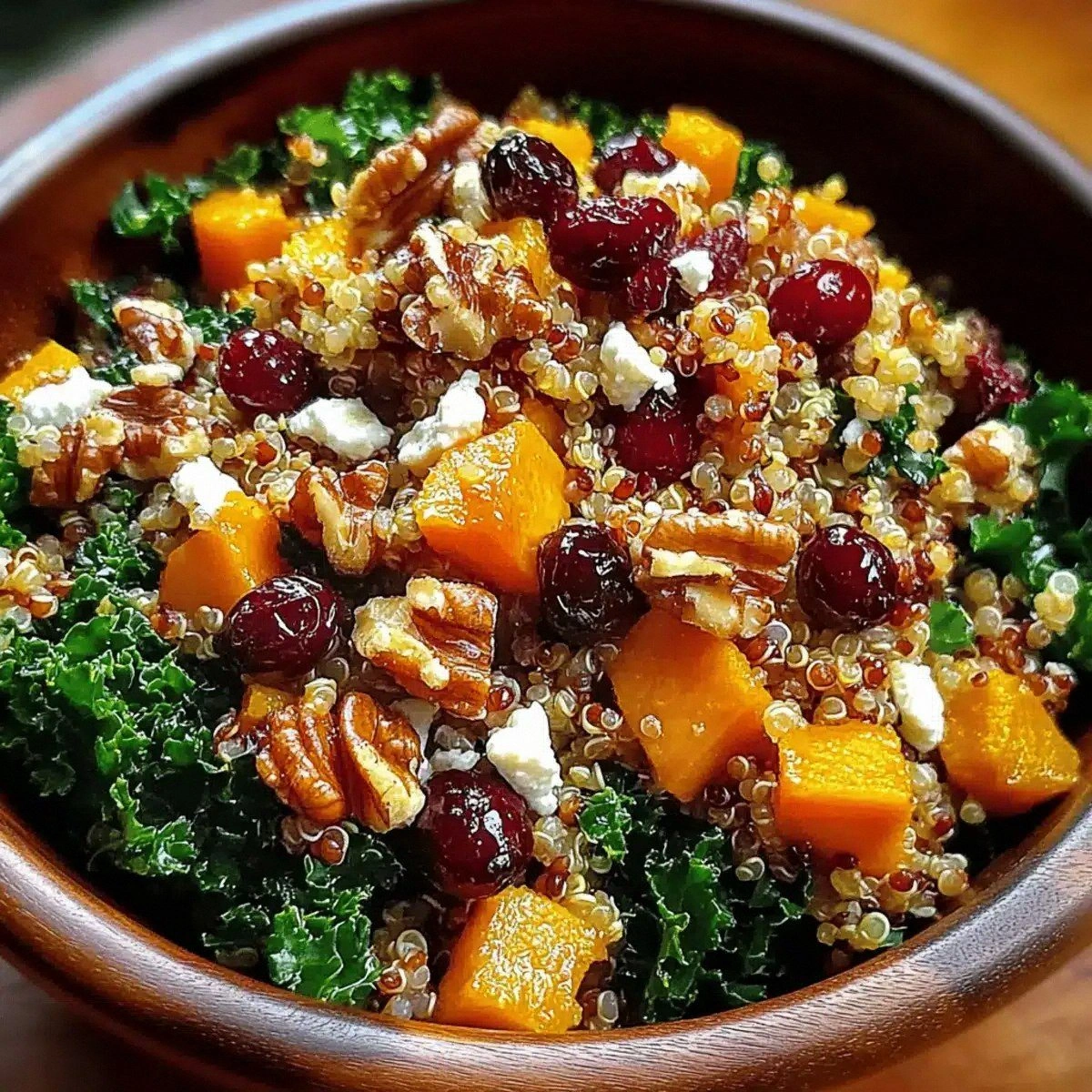
Swap the cucumber for roasted butternut squash and add a handful of toasted walnuts. The sweet, nutty flavors transform the salad into a comforting winter dish.
Storing and Bringing It Back to Life
Fridge Storage
Store the salad in an airtight container for up to three days. Keep the dressing separate until you’re ready to serve to maintain the quinoa’s crispness. When you’re ready, pour the dressing over the salad and toss gently.
Freezer Friendly
Quinoa and vegetables can be frozen separately for up to two months. Thaw overnight in the refrigerator, then toss with fresh dressing and herbs before serving. The texture may be slightly softer, but the flavor remains intact.
Best Reheating Method
If you prefer a warm salad, gently reheat the quinoa in a skillet with a splash of water or broth for a minute, then mix with the dressing. Add a tiny splash of water before reheating to keep the grains from drying out; this steaming technique brings the quinoa back to life.