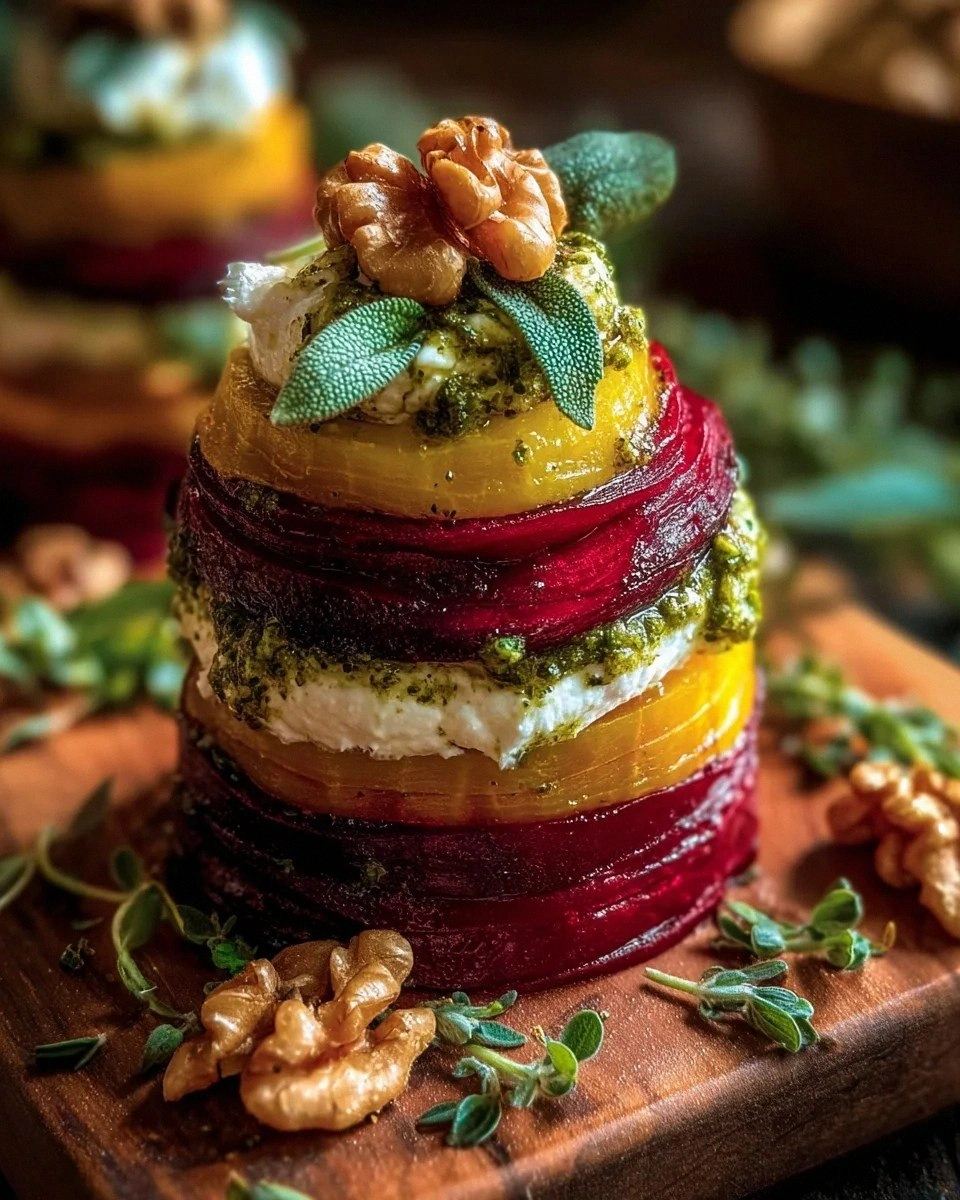
I was in the middle of a frantic weekday dinner scramble when a friend dared me to create something that could stand up to a holiday buffet. I grabbed the nearest sweet potatoes, a sack of beets, and a tub of ricotta, then thought, “What if I turn these humble roots into a tower of flavor?” The kitchen filled with the sweet, earthy perfume of roasting vegetables, the crackle of olive oil hitting a hot pan, and the faint buzz of my oven fan humming like a tiny helicopter. The moment I sliced into the first stack, the colors burst like a painter’s palette—deep magenta, amber orange, and specks of green pesto—so vivid I almost felt guilty for eating it.
What makes this dish truly unforgettable is the marriage of textures: the caramelized edges of the sweet potatoes give way to the buttery softness of the beets, all crowned with a cloud of whipped cheese that melts into every crevice. Imagine a bite that starts with a crunchy walnut snap, slides into a silky cheese veil, and finishes with a lingering herbaceous kiss from the basil pesto. Most recipes try to keep things simple and end up flat, but I’ve layered flavor like a symphony—each ingredient plays its part, yet none overpowers the other. I’ll even throw in a secret technique involving a quick broil that turns the tops into a lightly charred crown, adding a smoky note you didn’t know you were missing.
I’ll be honest — I ate half the batch before anyone else got a chance to try it, and that’s because the combination is so addictive that you’ll find yourself daring to taste it and not go back for seconds. This version stands out because it respects the natural sweetness of the vegetables while adding a luxurious, tangy cheese layer that makes the whole thing feel like a restaurant‑grade appetizer. If you’ve ever struggled with soggy roasted veggies or bland cheese spreads, you’re not alone — and I’ve got the fix that turns those kitchen fails into a show‑stopping centerpiece.
Picture yourself pulling this out of the oven, the whole kitchen smelling incredible, the steam rising like a curtain call before the performance begins. The golden‑brown tops glisten with a whisper of olive oil, and the walnuts are toasted to perfection, promising that satisfying crunch. Okay, ready for the game‑changer? Let me walk you through every single step — by the end, you’ll wonder how you ever made it any other way.
What Makes This Version Stand Out
- Flavor Harmony: The earthy beet meets the sweet potato in a perfect sweet‑savory duet, while the basil pesto adds a fresh herbaceous lift that keeps the palate from getting stuck.
- Texture Parade: You get caramelized crisp edges, creamy interior, and a nutty crunch—all in one bite, creating a mouthfeel that’s as exciting as a fireworks display.
- Simplicity Meets Sophistication: Only seven core ingredients, yet the result feels like a dish you’d order at a five‑star bistro.
- Ingredient Quality: Using extra‑virgin olive oil and fresh basil pesto elevates the humble roots to gourmet status.
- Visual Wow Factor: The stacked towers look like edible art, making them perfect for dinner parties or Instagram moments.
- Make‑Ahead Friendly: Roast the veg ahead, whip the cheese, then assemble quickly—ideal for busy weeknights.
- Versatile Crowd‑Pleaser: Whether you serve it as an appetizer, side, or even a light main, it garners rave reviews from vegans (swap cheese) to meat‑eaters alike.
- Seasonal Flexibility: Sweet potatoes and beets are at their peak in fall, but the recipe shines year‑round thanks to pantry‑friendly pesto and walnuts.
Inside the Ingredient List
The Flavor Base
Sweet potatoes are the heart‑beat of this dish. Their natural sugars caramelize in the oven, creating a buttery, almost honeyed flavor that balances the earthiness of the beets. If you skip them, you lose that comforting sweetness and the dish can feel overly vegetal. When selecting, look for firm, orange‑fleshed tubers with smooth skins—any blemishes indicate they’re past their prime.
Beets bring a deep, ruby‑red color that’s impossible to ignore, and their subtle sweetness complements the sweet potatoes while adding a mineral richness. Roasting softens their fibrous texture, turning them into melt‑in‑your‑mouth ribbons. If you substitute with carrots, you’ll miss the unique earthy undertone that makes the stack unforgettable.
The Texture Crew
Olive oil does more than just keep the veggies from sticking; it acts as a flavor carrier, helping the natural sugars on the surface of the sweet potatoes and beets to brown beautifully. Choose a robust extra‑virgin variety for a peppery finish—cheap, bland oil will mute the entire flavor profile.
Walnuts are the surprise guest that adds a satisfying crunch and a buttery, slightly bitter note that cuts through the sweetness. Toast them lightly in a dry skillet until they’re fragrant; this step is non‑negotiable because raw walnuts can taste flat and soggy. If you’re allergic, try toasted pistachios for a similar texture with a different flavor twist.
The Unexpected Star
Basil pesto is the green flash in this culinary sky—its fresh herbaceousness lifts the dish from “comfort food” to “elevated comfort.” A good pesto balances basil, pine nuts, Parmesan, garlic, and oil; if you’re short on time, a high‑quality store‑bought version works just fine. Swapping in sun‑dried tomato pesto will add a tangy depth, but keep the basil for that signature aroma.
The Final Flourish
Ricotta or goat cheese provides the creamy, airy layer that binds the stack together. Ricotta offers a mild, milky sweetness that lets the vegetables shine, while goat cheese adds a tangy punch that can cut through the sweetness for those who love a bit of edge. Whip either cheese with a splash of lemon juice and a pinch of salt for a light, spreadable texture that melts into the warm vegetables.
Everything's prepped? Good. Let's get into the real action...
The Method — Step by Step
Preheat your oven to 425°F (220°C). While the oven warms, line two large baking sheets with parchment paper—this prevents sticking and makes cleanup a breeze. Toss the sweet potato cubes and beet cubes separately with 1½ tbsp olive oil, a generous pinch of salt, and a dash of pepper. Spread them out in a single layer; this ensures each piece gets that coveted caramelized edge. The kitchen will start to fill with that sweet‑savory aroma, and you’ll know you’re on the right track.
Slide the sweet potatoes onto the top rack and the beets onto the bottom rack. Roast for 20 minutes, then flip each piece with a spatula to promote even browning. After another 15‑20 minutes, the sweet potatoes should be golden‑brown at the edges, and the beets will have softened to a tender, melt‑in‑your‑mouth consistency. If you hear a faint sizzle, that’s the sound of flavor forming—listen for it.
While the veg roasts, prepare the whipped cheese. In a medium bowl, combine 1 cup ricotta (or goat cheese), 1 tablespoon lemon zest, 1 teaspoon lemon juice, and a pinch of salt. Using a hand mixer on low speed, beat until the mixture becomes airy and light—about 45 seconds. The cheese should hold soft peaks, resembling a cloud that will melt into the warm vegetables later.
Toast the walnuts in a dry skillet over medium heat for 4‑5 minutes, stirring constantly. You’ll know they’re ready when they turn a deep amber and give off a nutty fragrance. Transfer them to a plate and, once cooled, roughly chop them. This step adds a crunchy contrast that’s essential for the final texture.
Now it’s assembly time. Take a shallow serving dish and start with a layer of roasted sweet potato slices, overlapping them slightly to create a stable base. Spoon a generous dollop of the whipped cheese over the sweet potatoes, spreading it just enough to cover the surface. Next, add a layer of roasted beet slices, followed by another swirl of cheese. Repeat the layering until you’ve built three to four tiers, finishing with a sweet‑potato layer on top.
Drizzle the entire stack with the remaining 1½ tbsp olive oil and a final sprinkle of salt and pepper. Then, scatter the toasted walnut pieces over the top, pressing them lightly into the cheese so they adhere. Finish with a drizzle of basil pesto—about a quarter cup—allowing it to pool in the crevices, creating pockets of herbaceous brilliance.
Let the assembled stacks rest for five minutes before serving. This short pause lets the cheese soften just enough to meld with the warm vegetables, while the walnuts retain their crunch. Serve warm, and watch your guests’ eyes widen as they cut into the tower, revealing the vibrant layers inside. That moment? Pure magic.
That's it — you did it. But hold on, I've got a few more tricks that'll take this to another level...
Insider Tricks for Flawless Results
The Temperature Rule Nobody Follows
Never roast sweet potatoes and beets at the same temperature if you want perfect caramelization. Sweet potatoes love a hotter environment (425°F) while beets prefer a slightly gentler heat (400°F) to avoid turning mushy. By using two racks and adjusting the oven temperature halfway through, you ensure each vegetable reaches its optimal texture. A friend once tried a one‑size‑fits‑all temperature and ended up with soggy beets—let’s just say the stack collapsed.
Why Your Nose Knows Best
Your sense of smell is the ultimate doneness gauge. When the edges of the sweet potatoes start to turn golden and release a caramel scent, you’re at the perfect stage. For the beets, you’ll notice a sweeter, earthy aroma intensifying as they near completion. Trust those olfactory cues more than a timer; ovens can vary by up to ten degrees.
The 5‑Minute Rest That Changes Everything
Allowing the stacks to rest after assembly isn’t just a formality—it’s a science. The brief pause lets the cheese melt just enough to bind the layers while the vegetables finish steaming in their own heat. Skipping this step results in a stack that slides apart, turning your masterpiece into a soggy mess.
Walnut Toasting Secrets
To achieve that deep, toasted flavor without burning, keep the walnuts moving constantly in the pan and watch for the first hint of a nutty perfume. Adding a pinch of sea salt at the end of toasting enhances the crunch and balances the sweetness of the veg.
Pesto Power Move
If you love pesto but want a smoother texture that drapes elegantly over the stack, blend the pesto with a tablespoon of warm water before drizzling. This thin‑out technique creates a glossy finish that doesn’t clump, making each bite look restaurant‑ready.
Creative Twists and Variations
This recipe is a playground. Here are some of my favorite ways to switch things up:
Spicy Kick
Add a pinch of smoked paprika to the sweet potatoes before roasting and stir a teaspoon of harissa into the whipped cheese. The heat will cut through the sweetness, perfect for those who love a little fire.
Vegan Version
Swap ricotta for a silken tofu blend with lemon juice and nutritional yeast. Use a vegan basil pesto (omit Parmesan) and replace walnuts with toasted pumpkin seeds for a nut‑free alternative.
Mediterranean Flair
Stir chopped sun‑dried tomatoes and Kalamata olives into the cheese mixture, then garnish the finished stack with crumbled feta. The briny notes add a sophisticated Mediterranean vibe.
Autumn Harvest
Incorporate roasted butternut squash cubes between the layers and drizzle a maple‑brown butter glaze over the top. The added sweetness makes it a perfect holiday appetizer.
Cheesy Overload
Mix grated Gruyère into the whipped cheese for a nutty, melt‑in‑your‑mouth experience. Top the final stack with a thin layer of shredded mozzarella and broil for a bubbly, golden crown.
Storing and Bringing It Back to Life
Fridge Storage
Place any leftovers in an airtight container and store them in the refrigerator for up to three days. Keep the pesto in a separate small jar to prevent sogginess. When ready to eat, gently reheat in a 350°F oven for 10‑12 minutes, covering with foil to retain moisture.
Freezer Friendly
The individual components freeze beautifully. Separate the roasted veggies, cheese mixture, and walnuts, then store each in freezer‑safe bags. They’ll keep for up to two months. To reassemble, thaw the veggies overnight in the fridge, warm the cheese slightly, then rebuild the stacks and finish with fresh walnuts.
Best Reheating Method
For the crispiest revival, preheat a skillet over medium heat, add a splash of olive oil, and sear the bottom of each stack for 2‑3 minutes. Finish in the oven for another 5 minutes. Adding a tiny splash of water before the oven step creates steam that restores the veg’s tenderness while preserving the walnut crunch.