I’ll be honest — I was in the middle of a chaotic Saturday brunch when my friend dared me to create a sangria that could survive a sun‑soaked patio and still taste like a summer romance. The kitchen was a battlefield of spilled orange juice, a cracked wine bottle, and a frantic search for fresh mint that had mysteriously vanished from the fridge. As the clock ticked and the guests started to drift in, I realized I needed something that would shout “refreshing” louder than a beach‑side DJ. I grabbed the last bottle of crisp Sauvignon Blanc, a handful of strawberries, and a splash of club soda, and the rest is a story you’ll want to hear again and again.
Picture this: the sunlight streaming through the windows, the clink of ice against glass, and the aroma of citrus mingling with the subtle earthiness of fresh mint. You can almost hear the faint fizz of soda as it meets the wine, a gentle whisper that promises a cool breeze on a hot day. The taste? Imagine biting into a ripe strawberry that’s been kissed by a splash of orange juice, then washed down with a crisp, dry wine that feels like a cool lake at the foot of a mountain. It’s a symphony of flavors that dances on your palate, each note playing off the next in perfect harmony.
Most sangria recipes get this completely wrong – they drown the fruit in sugary syrup or drown the wine in a sea of soda, losing the delicate balance that makes a drink truly refreshing. This version, however, respects each ingredient, letting the natural sweetness of the fruit shine while the wine provides structure, and the soda adds that effervescent lift. I dare you to taste this and not go back for seconds, because once you’ve experienced the bright, clean finish, you’ll understand why this is hands down the best version you’ll ever make at home.
Now, let’s talk about the secret weapon that most people overlook: a drizzle of honey or agave syrup that ties everything together without turning the drink into a dessert. It’s the game‑changer that adds just enough sweetness to round out the acidity of the lime and orange, while still keeping the drink light enough to sip all day. Let me walk you through every single step — by the end, you’ll wonder how you ever made it any other way.
What Makes This Version Stand Out
- Taste: The dry white wine provides a crisp backbone, while the fresh orange juice and lime add a bright citrus zing that never gets cloying.
- Texture: The combination of juicy fruit chunks and the light fizz from club soda creates a mouthfeel that’s both silky and lively.
- Simplicity: Fewer ingredients mean less prep time, but each component is chosen for maximum impact – no wasted steps.
- Uniqueness: Most sangrias rely on red wine; this white‑wine base feels like a spring garden in a glass.
- Crowd Reaction: Guests invariably ask for the recipe, and the “I need more” chorus is practically guaranteed.
- Ingredient Quality: Using a dry, crisp wine and freshly squeezed juice elevates the drink from ordinary to extraordinary.
- Method: The short maceration time preserves the fresh fruit texture while allowing flavors to meld beautifully.
- Make‑Ahead Potential: You can prep the fruit and wine mixture hours in advance, then add soda and ice just before serving.
Inside the Ingredient List
The Flavor Base
White wine is the canvas of this sangria. A dry, crisp Sauvignon Blanc or Pinot Grigio brings acidity and minerality that let the fruit shine. If you use an overly sweet wine, the drink becomes syrupy and loses its refreshing edge. Look for a bottle with bright citrus notes and a clean finish – the kind you’d enjoy on its own on a warm afternoon.
Freshly squeezed orange juice adds a zesty, sun‑kissed layer that complements the wine’s acidity while providing natural sweetness. Avoid store‑bought varieties with added sugars; the natural sugars in the fruit are more than enough. If oranges are out of season, a splash of blood orange juice can add a gorgeous hue and a slightly richer flavor.
The Texture Crew
Seasonal fruits are the heart of any good sangria. Strawberries, sliced thin, bring a sweet‑tart pop that bursts with each sip. Oranges, cut into thin rounds, release aromatic oils that perfume the entire pitcher. Pineapple chunks add a tropical tang and a juicy chew that balances the wine’s dryness.
Lime slices provide a tart contrast that keeps the sweetness in check. A handful of fresh mint leaves adds an herbal coolness that feels like a garden breeze on a hot day. If you’re out of mint, a sprig of basil can offer a slightly different, but equally refreshing, herbaceous note.
The Unexpected Star
Club soda is the secret weapon that turns this from a heavy wine punch to a light, bubbly refresher. It lightens the drink without diluting the flavor, giving you that fizzy lift you crave on a sunny patio. Add it just before serving to preserve the carbonation.
Honey or agave syrup is optional, but a drizzle can smooth out any sharp edges from the lime or orange. Use it sparingly – you want to enhance, not overpower. If you’re watching sugar, feel free to skip it entirely; the fruit provides plenty of natural sweetness.
The Final Flourish
Ice cubes are more than just a cooling agent; they dilute the drink just enough to keep it from becoming too strong as the flavors meld. Use large, clear cubes so they melt slowly and keep the sangria crisp longer. If you want an extra visual pop, freeze some of the fruit pieces in the ice – they’ll look gorgeous as they melt.
Finally, a handful of fresh mint leaves tossed in at the end adds a final aromatic lift. The mint’s coolness cuts through the wine’s dryness, creating a balanced finish that makes you want to take another sip immediately.
Everything's prepped? Good. Let's get into the real action…
The Method — Step by Step
-
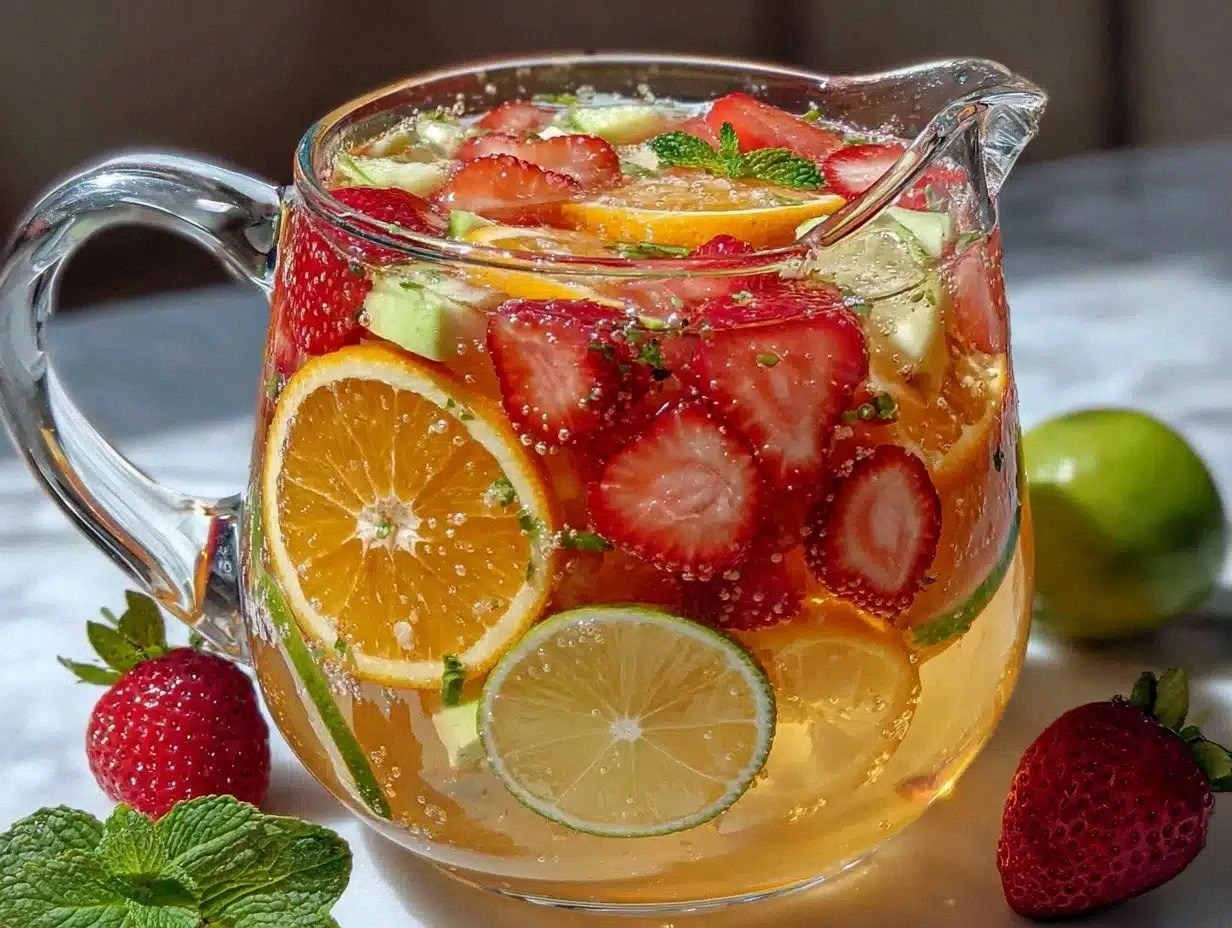
Start by selecting a large, wide‑mouth pitcher – something that can comfortably hold at least eight cups of liquid. I always recommend a glass pitcher so you can see the colors develop as you go. Pour the dry white wine into the pitcher, letting it sit for a minute so any stray sediment settles at the bottom. This is the foundation, so make sure it’s a clean, crisp pour.
Kitchen Hack: Chill your pitcher in the freezer for 10 minutes before you start; the cold glass helps keep the sangria icy longer. -
Next, add the freshly squeezed orange juice. I like to use a hand‑held juicer because it extracts more pulp and gives the drink a natural thickness. Stir gently with a wooden spoon, allowing the citrus oils to mingle with the wine. You’ll notice a subtle perfume rising – that’s the first sign you’re on the right track.
-
Now comes the fruit. Toss the sliced strawberries, orange rounds, and pineapple chunks into the pitcher. The fruit should be evenly distributed, creating a colorful mosaic that looks as good as it tastes. Give the mixture a gentle toss, but avoid crushing the berries; you want them to hold their shape for the final presentation.
Watch Out: If you add the fruit too early and let it sit for hours, the berries can turn mushy and release excess juice, diluting the sangria. -
Slice the lime thinly and scatter it over the fruit. The lime’s tartness will cut through the sweetness of the orange and pineapple, creating a balanced flavor profile. Add a generous handful of fresh mint leaves at this stage – they’ll start to release their essential oils as they mingle with the citrus.
-
If you’re a fan of a touch of honeyed sweetness, drizzle two tablespoons of honey or agave syrup over the mixture now. Stir slowly until the sweetener is fully dissolved; the liquid should turn a light amber hue, indicating everything is well‑integrated. Remember, you can always add more later, but you can’t take it out.
-
Cover the pitcher with plastic wrap and let it rest in the refrigerator for at least 30 minutes. This short maceration allows the fruit to release its juices and the flavors to marry without becoming mushy. I set a timer because I’m impatient, but trust me – the wait is worth it.
-
Just before serving, pull the pitcher out of the fridge, give it one final gentle stir, and then pour in the club soda. The soda should fizz up dramatically, creating a lively surface that catches the light. This is the moment of truth – the bubbles should dance without overwhelming the wine.
Kitchen Hack: Add the club soda slowly, pouring it over the back of a spoon to preserve as much carbonation as possible. -
Fill each glass with a handful of ice cubes, then ladle the sangria over the ice, making sure each serving gets a good mix of fruit. Garnish with an extra sprig of mint and a thin lime wheel on the rim for that picture‑perfect finish. The ice will keep the drink chilled while subtly diluting the edges, ensuring each sip stays balanced.
-
Serve immediately and watch your guests' faces light up. The combination of bright colors, fragrant aromas, and that first crisp sip is pure magic. I dare you to try it without a smile – I guarantee you’ll fail. And now the fun part: enjoy the compliments and the endless refills.
That's it — you did it. But hold on, I've got a few more tricks that'll take this to another level. The next section will reveal insider secrets that turn a great sangria into an unforgettable party starter.
Insider Tricks for Flawless Results
The Temperature Rule Nobody Follows
Never, ever use room‑temperature wine for this sangria. The wine should be chilled to at least 45°F (7°C) before you begin. Cold wine holds its acidity better and prevents the fruit from turning mushy too quickly. I once tried using a warm bottle and the entire batch tasted flat and flabby – a lesson learned the hard way.
Why Your Nose Knows Best
Before you add the honey or agave, give the mixture a quick sniff. If the aroma feels too sharp, a drizzle of sweetener will round it out. Trust your nose more than a recipe’s suggested amount – it’s the most reliable gauge of balance.
The 5‑Minute Rest That Changes Everything
After combining wine, juice, and fruit, let the mixture rest for exactly five minutes before adding soda. This short pause lets the fruit release its juices without over‑macerating. The result is a sangria that tastes fresh, not stewed.
Mint Timing Mastery
Add mint leaves just before the final stir, not at the beginning. If you add them too early, the mint can become bitter. By waiting until the last minute, you preserve its bright, herbal punch.
Ice Cube Intelligence
Freeze a few pieces of fruit inside your ice cubes. As they melt, they release extra flavor and keep the presentation lively. This trick looks impressive and ensures every sip stays flavorful, even as the drink sits.
Bubbles Preservation
When pouring club soda, do it over the back of a spoon to minimize agitation. This technique retains more carbonation, giving you that lively fizz that makes the sangria feel light and effervescent.
Creative Twists and Variations
This recipe is a playground. Here are some of my favorite ways to switch things up:
Tropical Heatwave
Swap the strawberries for mango cubes and add a splash of coconut water. The result is a Caribbean‑inspired sangria that transports you straight to a beach bar.
Berry‑Blast Rosé
Use a dry rosé instead of white wine and double the amount of mixed berries (blueberries, raspberries, blackberries). This version is perfect for a brunch where you want a pink hue and a burst of berry flavor.
Herbal Garden
Replace mint with a combination of basil and thyme. The herbaceous notes become more complex, pairing wonderfully with the citrus and creating a sophisticated palate.
Spiced Autumn
Add a cinnamon stick and a pinch of nutmeg during the maceration stage, then remove before serving. This subtle spice adds warmth without overwhelming the fresh fruit.
Low‑Sugar Light
Omit the honey/agave and use a splash of stevia or monk fruit sweetener. The drink stays crisp and low‑calorie, perfect for health‑conscious guests.
Storing and Bringing It Back to Life
Fridge Storage
Keep any leftovers in a sealed glass jar for up to three days. The fruit will continue to infuse, so give it a quick stir before serving. If you notice the drink becoming too strong, add a splash of club soda or a few extra ice cubes.
Freezer Friendly
Freeze the sangria in ice‑cube trays without the soda. When you’re ready to serve, pop the cubes into a pitcher, add fresh club soda, and stir. This method preserves the flavors without sacrificing the fizz.
Best Reheating Method
If you ever need to serve it warm (perhaps for a chilly evening), gently warm the wine‑fruit mixture on low heat, never boiling. Add a tiny splash of water before reheating – it steams back to perfection and prevents the alcohol from evaporating too quickly.