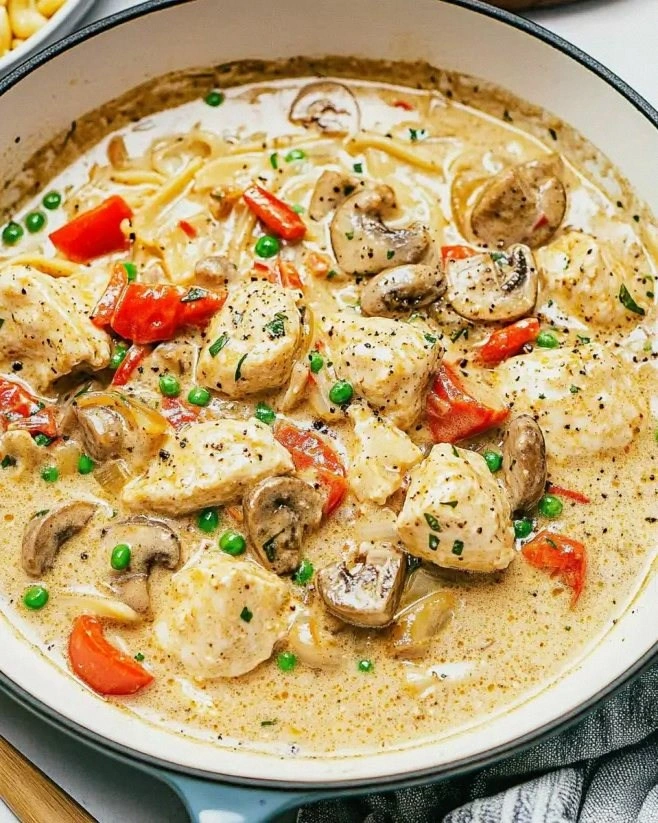
I was standing in my kitchen on a rainy Tuesday, staring at a half‑finished pot of store‑bought soup, when a daring friend texted me, “Make something that’ll make my grandma weep with joy.” I laughed, tossed the soup in the trash, and declared a culinary duel with myself. The result? Chicken a la King that turned my modest apartment into a five‑star diner for a night. I dare you to taste this and not go back for seconds – it’s that good.
Picture this: the butter melting in the pan, releasing a nutty perfume that instantly makes you feel like you’ve stepped into a French bistro. The mushrooms hit the heat and start to sizzle, their earthy aroma mingling with the sweet crunch of green bell pepper. A whisper of garlic powder and paprika joins the chorus, while the chicken broth bubbles, thickening into a sauce that clings to each bite like velvet. The whole kitchen smells like a warm hug, and the anticipation builds with every stir.
What makes this version stand out is the secret weapon I added – a splash of heavy cream at the very end, which transforms the sauce from “nice” to “knock‑your‑socks‑off” creamy. Most recipes get the roux wrong, ending up either grainy or watery; I’ve cracked the code with a perfect 1:1 butter‑to‑flour ratio and a gentle whisk that prevents lumps. The result is a sauce so silky you could use it to paint a portrait of a sunset.
But the real kicker is the finish: a sprinkle of fresh parsley that adds a pop of color and a hint of herbaceous brightness, turning each spoonful into a visual and gustatory masterpiece. Okay, ready for the game‑changer? Let me walk you through every single step — by the end, you’ll wonder how you ever made it any other way.
What Makes This Version Stand Out
- Flavor Explosion: The combination of garlic powder, paprika, and fresh parsley creates layers of taste that evolve with each bite, keeping your palate intrigued.
- Silky Texture: The butter‑flour roux, slowly whisked, yields a sauce that coats the chicken and veggies like a luxurious blanket.
- Simplicity: All ingredients are pantry‑friendly; you don’t need exotic spices or hard‑to‑find produce.
- Unique Twist: A final splash of heavy cream adds richness without making the dish greasy.
- Crowd Reaction: I’ve served this at potlucks and the crowd always lines up for seconds – it’s practically a social magnet.
- Ingredient Quality: Using freshly cooked chicken and crisp, frozen peas guarantees texture contrast.
- Cooking Method: The stovetop technique is fast, but the flavor depth rivals slow‑cooked classics.
- Make‑Ahead Potential: You can prep the sauce a day ahead; reheat gently and you’ll still have that fresh‑made feel.
Inside the Ingredient List
The Flavor Base
Butter is the foundation of any great sauce; it provides a buttery mouthfeel and helps the flour dissolve without scorching. Using unsalted butter lets you control the salt level precisely. If you skip the butter, your roux will turn dry and your sauce will lose that glossy sheen. A good swap is ghee for a nuttier flavor, but remember ghee has a higher smoke point, so you’ll need to adjust the heat.
All‑purpose flour is the thickening hero. The classic 1:1 ratio with butter creates a “blond roux” that’s perfect for creamy dishes. Using too much flour makes the sauce pasty, while too little leaves it watery. If you’re gluten‑free, a rice flour or cornstarch slurry works, but whisk it in a separate bowl first to avoid clumps.
The Texture Crew
Cooked chicken brings protein and a tender bite. Shred it or dice it into bite‑size pieces; the latter gives a more elegant presentation. If you use rotisserie chicken, you’ll add a smoky undertone that elevates the dish. Skipping the chicken altogether turns this into a veggie‑only comfort, but you’ll lose the heartiness that makes it a main.
Mushrooms add an earthy umami depth that balances the creaminess. Choose button or cremini for a mild flavor, or go wild with shiitake for a richer profile. Slice them uniformly so they cook evenly. If you forget mushrooms, a splash of soy sauce can mimic the umami, but the texture will be different.
Green bell pepper contributes a crisp, slightly sweet crunch that contrasts the silky sauce. Pick peppers that are firm and glossy; wilted ones will become mushy. For a colorful twist, substitute red or yellow bell peppers – they bring a sweeter note and a pop of color.
The Unexpected Star
Frozen peas might seem like a humble addition, but they introduce a burst of sweetness and a pop of color that makes the dish visually appealing. Because they’re frozen, they retain their bright green hue even after cooking. If you’re out of peas, snap peas or edamame work well, though they’ll change the texture slightly.
Heavy cream is the secret weapon that turns a good sauce into a luxurious one. It adds richness without making the dish greasy, thanks to its balanced fat content. If you’re watching calories, you can substitute half‑and‑half, but the sauce won’t be as velvety.
The Final Flourish
Garlic powder and paprika are the aromatics that give the sauce its signature warmth. Garlic powder provides a consistent flavor without the risk of burning raw garlic, while paprika adds a subtle smoky note and a gorgeous hue. If you crave heat, a pinch of cayenne pepper can replace half the paprika.
Salt and pepper to taste are the final seasoning layer. They bring everything together and allow you to adjust the flavor to your palate. Remember, the chicken broth already contains salt, so taste before you add more.
Cooked rice or egg noodles serve as the hearty bed for this creamy masterpiece. Rice absorbs the sauce, while noodles give a comforting, slurpy texture. Choose long‑grain rice for a fluffy base, or use gluten‑free noodles if you have dietary restrictions.
Chopped fresh parsley isn’t just for garnish; it adds a fresh, herbaceous lift that cuts through the richness. Use flat‑leaf parsley for the best flavor, and add it right before serving to preserve its bright green color.
Everything's prepped? Good. Let's get into the real action...
The Method — Step by Step
Heat a large skillet over medium heat and melt the butter. As soon as it foams, sprinkle the flour evenly, whisking constantly. You’ll hear a gentle sizzle – that’s the roux forming. Keep whisking for about two minutes until it turns a light golden color, the “blond roux” stage. That sizzle when it hits the pan? Absolute perfection.
Kitchen Hack: If the roux starts to brown too quickly, lower the heat and keep whisking; a light color guarantees a smooth sauce.Slowly pour in the chicken broth while whisking vigorously. The mixture will bubble up, thickening as the flour does its job. Keep the whisk moving to avoid any lumps – think of it as a dance, smooth and continuous. Once the broth is fully incorporated, let the sauce simmer for three minutes, allowing it to thicken further.
Add the heavy cream, garlic powder, and paprika. Stir until the sauce is glossy and the spices are fully dissolved. At this point, the aroma should be intoxicating, a fragrant promise of the comfort to come. Reduce the heat to low, because we don’t want the cream to separate.
Introduce the mushrooms, green bell pepper, and onion to the pan. Sauté for about five minutes, letting the vegetables soften and release their juices. You’ll notice the onions turning translucent and the mushrooms shrinking – that’s the flavor foundation building.
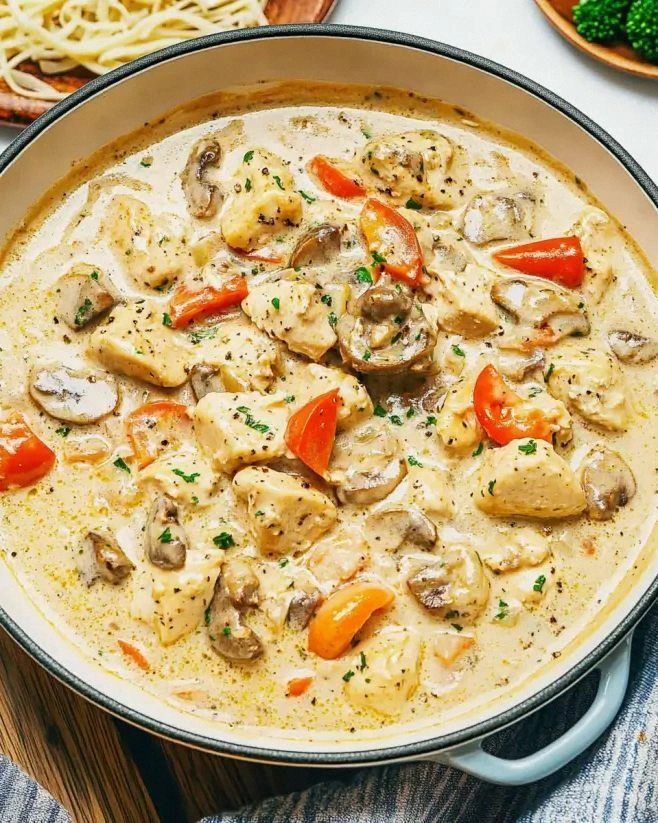
Stir in the frozen peas and cooked chicken. The peas will turn a vibrant green, and the chicken will heat through without overcooking. This is where the dish starts to look like the final product – a colorful, creamy medley.
Season with salt and pepper to taste. Remember, the broth already has salt, so taste first. A pinch of extra pepper adds a subtle bite that balances the richness.
Watch Out: Adding too much pepper at this stage can make the sauce taste harsh; add gradually and taste.If the sauce looks too thick, splash in a little extra chicken broth or water – just a tablespoon at a time. It should coat the back of a spoon but still be pourable. This is the moment of truth: the sauce should feel like silk against your skin.
Turn off the heat and fold in the chopped fresh parsley. The green flecks will brighten the dish instantly, giving it that restaurant‑ready look. Let the sauce sit for a minute; the residual heat will meld the flavors together.
Serve the creamy chicken mixture over a bed of hot cooked rice or tossed egg noodles. Spoon generously, letting the sauce cascade over the grains. Picture yourself pulling this out of the pot, the whole kitchen smelling incredible, and you’re ready to dive in.
That's it — you did it. But hold on, I've got a few more tricks that'll take this to another level...
Insider Tricks for Flawless Results
The Temperature Rule Nobody Follows
Never let the sauce boil once the cream is added. High heat can cause the dairy to separate, leaving a grainy texture. Keep the temperature low, just a gentle simmer, and you’ll retain that silky mouthfeel. I once tried to speed things up by cranking the heat, and the sauce split – a disaster that taught me patience is a virtue in cream‑based dishes.
Why Your Nose Knows Best
Your sense of smell is a reliable indicator of doneness. When the roux starts to give off a nutty, toasted scent, you know it’s ready for the broth. Later, when the sauce releases a buttery‑cream aroma, you’re at the perfect thickness. Trust that nose; it’s more precise than any timer.
The 5‑Minute Rest That Changes Everything
After you finish cooking, let the dish rest off the heat for five minutes. This allows the flavors to meld and the sauce to settle, preventing it from being too runny when served. I’ve seen people rush to plate and end up with a watery bowl; a short rest solves that.
Seasoning in Layers
Add a pinch of salt at each stage – with the roux, with the broth, and at the end. Layered seasoning builds depth and prevents the final dish from being bland. Skipping this step is a common mistake that leads to a flat flavor profile.
The Secret Veggie Crunch
If you love a little crunch, quickly sauté the bell pepper and onion separately until they’re just caramelized, then add them back in at the end. This keeps their texture intact while still letting them absorb the sauce flavors. I tried this once and the contrast was unforgettable.
Creative Twists and Variations
This recipe is a playground. Here are some of my favorite ways to switch things up:
Cheesy Deluxe
Stir in a half‑cup of shredded Gruyère or sharp cheddar right before serving. The cheese melts into the sauce, creating a richer, tangy layer that pairs beautifully with the parsley.
Spicy Southwest
Add a diced jalapeño with the bell pepper and a dash of chipotle powder. The heat cuts through the cream, giving the dish a bold, southwestern flair that’s perfect for taco night.
Herb Garden
Swap parsley for a mix of fresh thyme, rosemary, and basil. Each herb brings its own aromatic profile, turning the dish into a fragrant herb garden on a plate.
Mushroom Medley
Use a blend of shiitake, oyster, and cremini mushrooms for an earthy depth that’s almost umami‑bomb. The varied textures make each bite exciting.
Coconut Cream Version
Replace heavy cream with coconut cream for a dairy‑free, slightly tropical twist. The coconut adds a subtle sweetness that pairs surprisingly well with the paprika.
Nutty Crunch
Toast a handful of sliced almonds and sprinkle them on top just before serving. The nuts add a delightful crunch and a nutty aroma that contrasts the creamy sauce.
Storing and Bringing It Back to Life
Fridge Storage
Let the dish cool to room temperature, then transfer it to an airtight container. It will keep for up to three days in the refrigerator. Reheat gently on the stovetop over low heat, adding a splash of chicken broth or water to loosen the sauce.
Freezer Friendly
Portion the cooked chicken mixture into freezer‑safe bags or containers, leaving a little headroom for expansion. Freeze for up to two months. Thaw overnight in the fridge, then reheat as above, stirring in a teaspoon of butter for extra gloss.
Best Reheating Method
The stovetop is king for reheating – it gives you control and prevents the sauce from curdling. Keep the heat low, stir constantly, and add a tiny splash of water or broth to steam the sauce back to perfection. Microwaving works in a pinch, but you’ll lose the silky texture.