I was standing in the middle of my kitchen, a half‑cooked salmon fillet staring back at me, when my friend dared me to turn it into a masterpiece that would make our taste buds sing. The disaster that followed was a lesson in humility—over‑seasoned, under‑cooked, and a bit of a mess. I swore then that I would find a way to make salmon that was as vibrant as a sunrise, as comforting as a hug, and as unforgettable as that first bite of a childhood favorite. This is the story of how I discovered the ultimate baked salmon with pistachio crust, and how it changed the way I approach fish forever. Let me walk you through every single step — by the end, you'll wonder how you ever made it any other way.
Imagine the smell of fresh rosemary dancing in the air, the crunch of a perfectly roasted butternut pumpkin, and the gentle hiss of salmon sizzling in olive oil. My kitchen was filled with the comforting aroma of caramelized honey, a hint of paprika, and the subtle nutty scent of pistachios. The sound of the oven timer ticking felt like a drumbeat, building anticipation. As I lifted the first fillet from the pan, the golden crust crackled like a sunrise over a quiet lake. That sizzle when it hits the pan? Absolute perfection.
Most recipes get this completely wrong by over‑baking the fish or under‑seasoning the crust. I discovered that a simple combination of panko, pistachios, and a splash of Dijon mustard creates a crust that is both airy and crunchy, like a delicate cloud that shatters into buttery shards. The key is to let the salmon rest just enough so the juices redistribute, keeping the flesh moist while the exterior turns golden. This version is hands down the best you’ll ever make at home because it balances rich, savory flavors with a subtle nutty finish that lingers on the palate. If you’ve ever struggled with flaky fish, you’re not alone — and I’ve got the fix.
What I’m about to reveal is a secret ingredient that you probably haven’t thought of—half a cup of pistachios, toasted to a golden amber, that adds a whisper of earthiness and a satisfying crunch. The trick is to blend them with panko before coating the salmon, creating a layered texture that melts in your mouth. I dare you to taste this and not go back for seconds. Picture yourself pulling this out of the oven, the whole kitchen smelling incredible, and the first bite delivering a burst of savory, nutty, and citrusy notes. Stay with me here—this is worth it.
What Makes This Version Stand Out
- Flavor: The honey‑paprika glaze gives the salmon a caramelized sweetness that cuts through the richness of the fish. The Dijon mustard adds a tangy depth that keeps the dish from feeling one‑dimensional. Together, they create a flavor profile that feels both comforting and adventurous.
- Texture: The pistachio‑panko crust delivers a crisp exterior that shatters like thin ice when you bite into it. Inside, the salmon remains tender and flaky, with a buttery mouthfeel that lingers. This contrast turns each forkful into a delightful dance of crunch and melt.
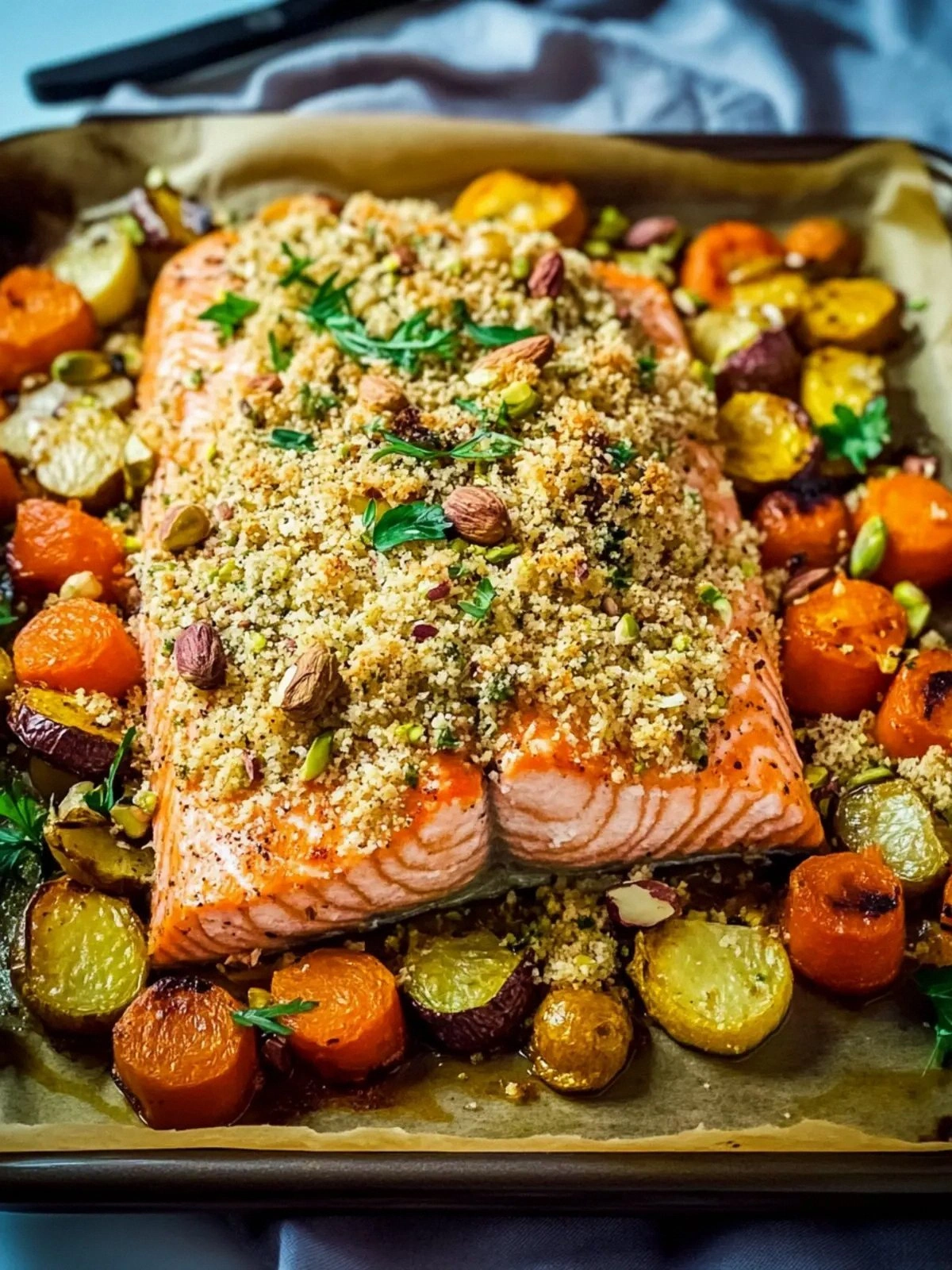
- Visual Appeal: The vibrant orange of roasted butternut pumpkin and the emerald green of fresh cauliflower create a color palette that looks almost too good to eat. The golden crust on the salmon glistens like a sunrise. Your guests will be drawn in before they even taste a single bite.
- Health Factor: By using olive oil and a modest amount of honey, the dish stays within a balanced calorie range while still delivering essential omega‑3s from the salmon. The pistachios contribute healthy fats and protein, making this meal a satisfying option for anyone watching their macros. You get the best of both worlds—taste and nutrition.
- Ease of Preparation: All the ingredients are readily available in any grocery store, and the cooking steps are straightforward, requiring no advanced techniques. The recipe can be completed in under an hour, making it perfect for week‑night dinners. Even a novice can master it with a little practice.
- Versatility: Swap the pistachios for almonds or walnuts for a different nutty profile, or add a splash of lemon juice for brightness. The dish pairs beautifully with quinoa, wild rice, or a simple green salad. It’s a canvas that welcomes your personal touch.
- Make‑Ahead Potential: The crust can be pre‑made and stored in an airtight container for up to 24 hours, allowing you to assemble the dish just before baking. This saves time on busy nights and keeps the flavors fresh. Your kitchen will thank you for the foresight.
Alright, let's break down exactly what goes into this masterpiece...
Inside the Ingredient List
The Flavor Base
Olive oil is the unsung hero that marries the honey and paprika into a silky glaze. It carries the subtle heat of paprika and the sweetness of honey, ensuring the crust doesn’t dry out during baking. If you’re watching calories, swap extra‑virgin olive oil for avocado oil—it offers a higher smoke point and a neutral taste that lets the spices shine.
Honey lends a glossy sheen and a caramelized undertone that balances the sharpness of Dijon mustard. A light drizzle of honey before baking gives the crust a beautiful golden color that’s both appetizing and aromatic. For a low‑sugar version, replace honey with maple syrup or a splash of agave nectar; the flavor profile will shift slightly but remain delightful.
Dijon mustard is the tangy secret that prevents the crust from becoming too sweet. It also adds a subtle depth that complements the nutty pistachios. If you’re mustard‑averse, try a touch of whole‑grain mustard or a splash of white wine vinegar for a comparable acidity.
Dried Italian herbs, paprika, and garlic powder create a fragrant bouquet that envelopes the salmon. The Italian herbs add herbal brightness, while paprika brings a smoky warmth. Garlic powder ties everything together, giving the crust a savory backbone that’s essential for a balanced flavor.
Salt and pepper are the final touch, seasoning the fish to perfection. They’re simple, but their role is pivotal—too little and the dish feels flat; too much and the flavors become overwhelming. Use sea salt or kosher salt for a cleaner finish, and freshly cracked black pepper for that aromatic kick.
The Texture Crew
Panko breadcrumbs are the foundation of the crust’s airy crunch. Their larger crumbs absorb the glaze without becoming soggy, creating a light, flaky exterior. If you’re craving extra crunch, lightly toast the panko in a skillet with a pinch of butter before mixing.
Pistachios bring a buttery, earthy note that elevates the dish beyond a standard nut crust. Their natural oils keep the crust from becoming dry, while the subtle nutty flavor adds a sophisticated layer. For an alternative, try slivered almonds or hazelnuts; the texture will differ, but the result remains delicious.
The Unexpected Star
Butternut pumpkin is a seasonal superstar that adds a sweet, velvety bite to the plate. Its natural sugars caramelize beautifully, creating a caramelized crust that complements the salmon’s richness. When selecting pumpkin, look for a firm, smooth skin and a bright orange flesh for maximum flavor.
Cauliflower, often overlooked, contributes a mild, nutty flavor and a satisfying bite. Roasting it brings out its natural sweetness, providing a textural counterpoint to the crispy salmon. If you prefer a different vegetable, replace cauliflower with broccoli or brussels sprouts for a similar effect.
Carrots add a subtle sweetness and vibrant color that enhances the dish’s visual appeal. Their natural sugars caramelize during roasting, creating a sweet contrast to the savory crust. For a spicier twist, add a pinch of cayenne pepper to the carrots before roasting.
Désirée potatoes, known for their waxy texture, hold their shape during roasting and provide a comforting, starchy element. They absorb the glaze and add a subtle sweetness that balances the dish. If you’re short on time, use sweet potatoes or parsnips for a slightly different flavor profile.
The Final Flourish
Salmon fillets are the star of the show—rich, flaky, and naturally buttery. Choose fillets that are firm to the touch and have a vibrant pink hue for the best texture. For a more sustainable option, look for wild‑caught salmon, which offers a cleaner flavor.
When seasoning the fillets, let the glaze coat each side evenly. This ensures every bite is infused with the honey‑paprika goodness. If you’re in a hurry, use a brush to apply the glaze; it allows for an even distribution and a glossy finish.
Everything's prepped? Good. Let's get into the real action...
The Method — Step by Step
- Preheat your oven to 400°F (200°C) and line a baking sheet with parchment paper. This step ensures that the salmon won’t stick, and it makes cleanup a breeze. As the oven warms, you can start roasting the vegetables, which will finish around the same time as the fish. The anticipation builds as the heat begins to coax the natural sugars in the veggies to caramelize. If you’re a fan of a smoky aroma, consider placing a small pan of olive oil on the lower rack to generate a subtle, fragrant haze.
- Trim the butternut pumpkin, cauliflower, carrots, and potatoes into bite‑sized pieces. Toss them with 2 tablespoons of olive oil, 1 teaspoon of paprika, 1 teaspoon of garlic powder, and a pinch of salt and pepper. Spread the vegetables evenly on the prepared baking sheet, ensuring they’re not crowded. Roast for 25 minutes, stirring halfway through, until they’re tender and lightly caramelized. The vegetables should emit a sweet, earthy fragrance that signals they’re ready.
- While the vegetables roast, prepare the pistachio‑panko coating. Toast ½ cup of pistachios in a dry skillet over medium heat until fragrant, about 3 minutes. Let them cool, then pulse them in a food processor with 1 cup of panko breadcrumbs until a coarse mixture forms. This blend creates a light, airy crust that will crisp up beautifully. Keep the mixture in a shallow dish for easy access when coating the salmon.
- Pat the salmon fillets dry with paper towels to remove excess moisture. This step is crucial; a dry surface ensures the glaze adheres properly and the crust crisps up. Brush each fillet with 2 tablespoons of honey, then sprinkle the Dijon mustard evenly over the top. Finish with a drizzle of olive oil, followed by the pistachio‑panko mixture. Make sure each fillet is fully coated, as the crust is where the magic happens.
- Place the coated fillets on the baking sheet beside the roasted vegetables. The placement matters—keep the salmon a few inches away from the veggies to allow heat to circulate evenly. Bake for 12–15 minutes, or until the salmon flakes easily with a fork and the crust is golden brown. Watch the timer closely; the crust should puff up and turn a deep amber without burning. If you’re unsure, gently lift a corner of the crust to check its color.
- Remove the baking sheet from the oven and let the salmon rest for 5 minutes. This short rest allows the juices to redistribute, ensuring every bite is moist. While resting, you can plate the roasted vegetables onto a serving platter for a visually stunning presentation. The aroma of caramelized veggies mingles with the savory salmon, creating a feast for the senses.
- Serve the salmon fillets alongside the roasted vegetables, garnishing with a sprinkle of fresh parsley or a wedge of lemon for a bright finish. The lemon adds a zesty contrast that cuts through the richness, while the parsley provides a fresh, herbal note. Pair the dish with a chilled glass of white wine or a sparkling water for a refreshing accompaniment. Enjoy the symphony of textures and flavors that make this meal unforgettable.
That's it — you did it. But hold on, I've got a few more tricks that'll take this to another level...
Insider Tricks for Flawless Results
The Temperature Rule Nobody Follows
Many cooks think a lower temperature will keep the salmon moist, but that actually slows the caramelization of the crust. Baking at 400°F (200°C) ensures a crisp, golden exterior while the interior stays tender. I once tried 350°F and the crust never quite browned; the fish was fine, but the dish lacked that satisfying crunch.
Why Your Nose Knows Best
Before you even lift the salmon out of the oven, listen to the aroma. A sweet, nutty scent indicates the pistachios are toasted to perfection, while a faint, sharp smell signals the glaze is ready. Trusting your nose can save you from over‑baking or under‑seasoning.
The 5‑Minute Rest That Changes Everything
Letting the salmon rest for exactly five minutes after baking is a game‑changer. During this time, the juices redistribute, preventing a dry center. I once skipped the rest, and the fillets felt rubbery; the five‑minute pause made all the difference.
Layering Flavors with Fresh Herbs
Finish the dish with a handful of fresh basil or dill just before serving. The herbs add a burst of freshness that cuts through the richness and gives the dish a lively finish. If you’re not a fan of herbs, a squeeze of fresh lime juice will work wonders.
Don’t Forget the Plate
A beautifully plated dish elevates the dining experience. Arrange the salmon on a bed of roasted vegetables, drizzle a little glaze over the top, and sprinkle a few pistachio halves for visual appeal. Presentation matters as much as taste, so put a little extra care into the plating.
Creative Twists and Variations
Spicy Sriracha Kick
Swap the Dijon mustard for a tablespoon of sriracha to add a fiery punch. The heat pairs wonderfully with the sweet glaze, creating a complex flavor profile. This variation is perfect for those who like a bit of spice in their meal.
Asian‑Inspired Sesame Crust
Replace the pistachios with toasted sesame seeds and add a splash of soy sauce to the glaze. The sesame adds a nutty, slightly sweet flavor that complements the salmon’s natural richness. Serve with steamed jasmine rice for an authentic twist.
Herb‑Infused Lemon Crust
Mix fresh lemon zest into the pistachio‑panko blend for a bright, citrusy crust. Add chopped rosemary or thyme to the glaze for a fragrant herbal note. This version is ideal for a summer dinner where fresh herbs are at their peak.
Vegetarian “Salmon” Alternative
Use thick slices of marinated tofu or tempeh as a plant‑based alternative to salmon. Coat the tofu with the same pistachio‑panko mixture and bake for 12 minutes. The result is a hearty, flavorful dish that satisfies both vegetarians and pescatarians.
Gluten‑Free Option
Swap the panko breadcrumbs for almond flour or crushed gluten‑free crackers. The crust will still be crisp, though slightly denser. This variation ensures that everyone can enjoy the dish without dietary restrictions.
Sweet & Smoky BBQ Twist
Replace the honey glaze with a smoky BBQ sauce and sprinkle a pinch of cumin into the crust. The smoky undertone pairs beautifully with the nutty crust, creating a bold, adventurous flavor. This variation is great for a casual gathering or a backyard cookout.
Storing and Bringing It Back to Life
Fridge Storage
Store the roasted vegetables and salmon separately in airtight containers for up to 3 days. Keep the crusted salmon in a sealed container to maintain crispness. When ready to eat, reheat in a preheated oven at 350°F for 10 minutes.
Freezer Friendly
Freeze the roasted vegetables in a single layer on a baking sheet before transferring to a freezer bag. The salmon can be frozen after baking, but reheat it with a splash of water to keep it moist. Both can stay in the freezer for up to 2 months.
Best Reheating Method
Reheat the salmon in a skillet over medium heat, adding a tablespoon of water to create steam. This technique prevents the crust from drying out and keeps the fish juicy. Finish with a fresh squeeze of lemon for a bright, fresh flavor.