I still remember the first time I attempted Thai basil chicken in my cramped studio kitchen. The smoke alarm serenaded my neighbors at 11:37 p.m., my wok looked like it had survived a meteor shower, and yet the one bite I salvaged tasted so electric—sweet, salty, fiery, fragrant—that I stood there in my soot-speckled robe, chopsticks trembling, absolutely convinced I'd eaten a bowlful of Bangkok street-market magic. Fast-forward through a small mountain of scorched garlic and a few near-misses with the fire department, and I can proudly say this recipe is the distilled essence of that midnight revelation, minus the drama and plus a level of flavor that will make your delivery apps worry for their job security.
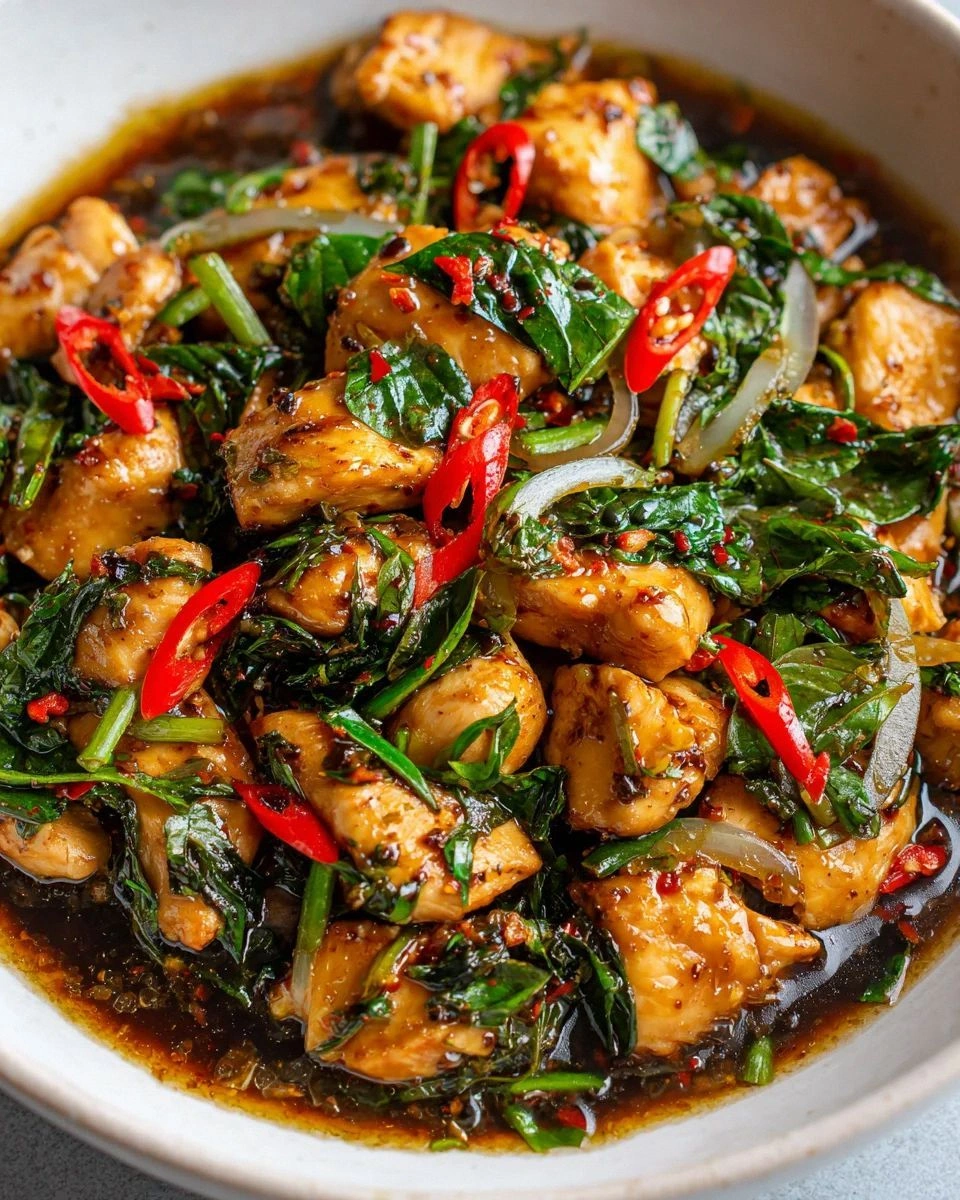
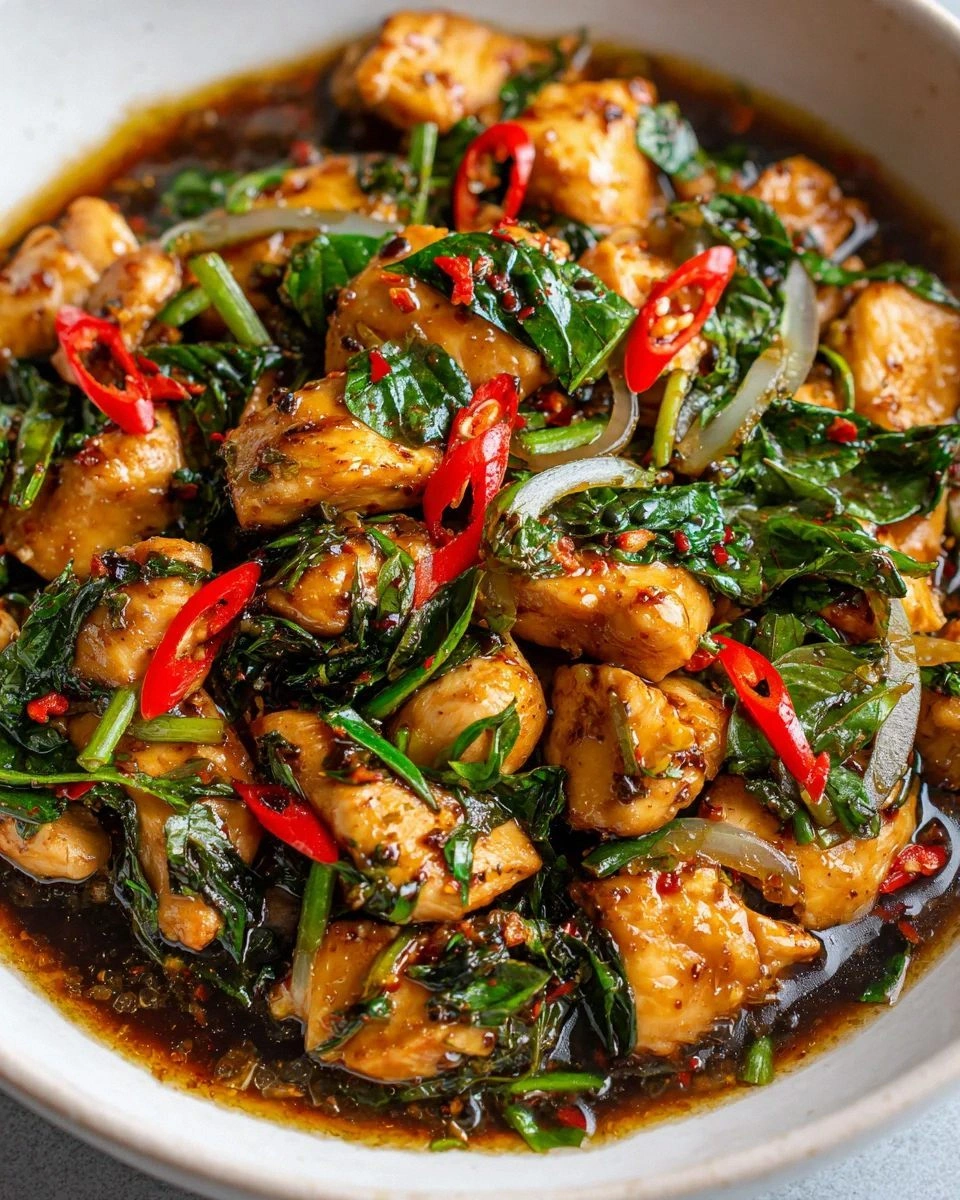
What you're about to cook isn't the timid, overly sweetened version that hides under neon gravy in mall food courts. No, this is the punchy, lightning-fast, chile-laced stir-fry that Thai vendors toss in carbon-steel pans over jet-engine flames, wrapped in the perfume of holy basil that hits you like a summer thunderstorm. Picture this: chicken thigh nuggets bronzed at the edges, their juices sealed in by a glaze that balances salty funk, gentle sweetness, and a slow-building heat that blooms rather than burns. The basil wilts in the final seconds, releasing a menthol-citrus whisper that ties the whole dish together like the perfect last chord of a song you want on repeat.
I'll be honest—I ate half the batch before anyone else got to try it. Twice. And I'm not apologizing, because restraint is overrated when every bite crackles with that soy-oyster-sugar trifecta, when the rice soaks up the mahogany sauce like it's been waiting its whole grainy life for this moment. If you've ever struggled with watery stir-fries, bland chicken, or basil that turns Army-drab and bitter, you're not alone—and I've got the fix. Let me walk you through every single step—by the end, you'll wonder how you ever made it any other way.
What Makes This Version Stand Out
- Lightning-Fast Flavor: From fridge to table in under twenty minutes, this dish doesn't ask you to babysit a marinade for hours; instead, it relies on a high-heat sear plus a finishing sauce that lacquers every cube of chicken in record time.
- Thigh Perfection: Most recipes wimp out with dry breast meat. We stay loyal to juicy thigh fillets that stay tender even if your stove runs hot enough to rival the sun.
- Basil Two Ways: A big handful goes in at the very end for bright perfume, while a few leaves hit the oil first to infuse the fat—subtle, but it amplifies the aroma like turning the volume knob to eleven.
- Balanced Heat: One bird's-eye chile, seeds removed if you're scared, minced so it disperses like glitter. You control the fireworks without drowning the other flavors.
- Pantry-Friendly Sauces: No obscure pastes requiring Google translate; oyster, light soy, and a kiss of dark soy create layers of sweet-salty complexity you can find in any decent grocery aisle.
- One Wok Wonder: Minimal dishes, maximum payoff. Even the sauce gets mixed right in the measuring cup, because who needs extra bowls to wash when Netflix is waiting?
Alright, let's break down exactly what goes into this masterpiece...
Inside the Ingredient List
The Flavor Base
Chicken thigh fillets are the unsung heroes here. They carry a slightly richer flavor than breast, and their extra intramuscular fat keeps them plump even when your stove decides to impersonate a blast furnace. Cutting them into bite-size pieces maximizes surface area, meaning more caramelized edges and more nooks for that glossy sauce to cling to. Skip the thighs and you'll get stringy, sad meat that tastes like it gave up halfway through dinner.
The Aroma Bombs
Garlic and bird's-eye chile form the pungent backbone. Finely chopping the garlic lets it melt into the oil within seconds, preventing those bitter half-cooked chunks that ruin polite conversation. The chile brings a sharp, grassy heat that blooms rather than wallops; deseed if you're cooking for kids or seed half for a gentle tingle. Forget the jarred stuff—fresh chiles cost pennies and smell like you just snapped a summer garden in half.
The Texture Crew
Green onion segments give a two-stage crunch: the whites soften into sweet silk, while the tops stay perky and vibrant. Cutting them into four-centimeter batons keeps them from shrinking into oblivion and adds structural integrity against the soft rice. No green onions? You could sub in thinly sliced shallots, but you'll miss that pop of color and gentle onion perfume that rounds the sharper edges of garlic and chile.
The Unexpected Star
Thai basil is the soul of the dish, peppery with a whisper of anise that ordinary sweet basil simply can't fake. The leaves are smaller, sturdier, and far more aromatic—think of them as the espresso shot to grocery-store basil's decaf. When the hot metal hits the leaves, they surrender essential oils that ride the steam straight into your olfactory system, a sensory shortcut that transports you to a Bangkok alley in flip-flop o'clock traffic. Substandard basil wilts into gray mush; fresh Thai basil stays vibrantly jade and keeps its perfume long enough for a victory lap around the dining table.
The Final Flourish
Oyster sauce brings oceanic depth without fishy rebellion, thickening the glaze with natural sugars that caramelize on contact with hot metal. Light soy provides straightforward salt, while dark soy offers molasses-like color and a mellow sweetness that stains the chicken a glossy mahogany. Sugar balances heat and salt, rounding edges so every bite feels like a harmonious chord rather than a shouting match. Water thins the mixture just enough to prevent a salty sludge and buys you a few extra seconds before anything scorches.
Everything's prepped? Good. Let's get into the real action...
The Method — Step by Step
- First, get your mise en place sorted like a pro. Whisk oyster sauce, light soy, dark soy, sugar, and water in a small measuring cup until the granules vanish; this prevents sugar crystals from burning when they meet hot metal. Pat the chicken cubes bone-dry with paper towels—moisture is the enemy of that golden crust you're chasing. Line everything up within arm's reach because once the wok ignites, there is no pause button, only smoke and chaos.
- Heat your wok—or your largest, heaviest skillet—over high heat until a bead of water evaporates in under two seconds. Swirl in the oil; it should shimmer like a heat mirage but not smoke aggressively. Immediately scatter in half the basil and watch it sputter, crisp, and perfume the fat, a thirty-second aromatherapy session that sets the tone for everything that follows.
- Add garlic and chile, stir-fry for ten seconds or until the garlic turns pale gold. Keep the morsels dancing so they don't bronze into bitter nuggets; that sizzle should sound like applause. The chile might make you cough—congratulations, your kitchen now doubles as a high-end spa with built-in sinus irrigation.
- Slide in the chicken, spreading it into a single layer. Resist the urge to flip like a maniac; let it sit for a full minute so the underside sears into a lacy, bronzed jacket. Then commence aggressive stir-frying, tossing until most pieces are opaque with just a blush of pink remaining.
- Pour in the sauce mixture; it will hiss and bubble like a witch's cauldron. Keep everything moving so the sugar doesn't grab the pan's throat. Within sixty to ninety seconds the liquid reduces to a syrupy sheen that coats the back of a spoon.
- Now the fun part: toss in the green onion segments and the remaining basil. Fold just until the basil wilts into a bright jade blanket and the onions flash from stiff to silky. The leaves should still hold their shape; if they've gone Army-green, you've crossed into over-wilted territory.
- Immediately kill the heat and transfer to a waiting bowl. Serve over steamed jasmine rice that greedily drinks up the mahogany sauce. Stand back for a moment and bask in the applause from your taste buds—yes, they're giving you a standing ovation.
That's it—you did it. But hold on, I've got a few more tricks that'll take this to another level...
Insider Tricks for Flawverless Results
The Temperature Rule Nobody Follows
Your pan must be rip-roaring hot before the first drip of oil. Test by flicking a few water droplets; they should skitter like marbles on glass and evaporate within two seconds. Anything cooler and the chicken will stew in its own juice, emerging gray and sulking rather than bronzed and bold. A friend tried skipping this step once—let's just say it didn't end well, and her dog still won't enter the kitchen when the exhaust fan is on.
Why Your Nose Knows Best
Trust aroma checkpoints: garlic should smell toasty, not acrid; chile should tickle your throat, not send you into a coughing fit; basil should release a sweet menthol cloud, not a compost heap funk. These sensory breadcrumbs tell you exactly when to push forward or back off. If your smoke alarm sings, you've overshot; if you smell nothing, you haven't committed enough heat to the party.
The 5-Minute Rest That Changes Everything
After cooking, let the stir-fry sit uncovered for five minutes. This brief pause allows the sauce to thicken further and the basil to settle into a glossy coat rather than a wilted mess. Covering immediately traps steam that drags everything into soggy territory. Use this window to plate your rice, pour a drink, or practice your Oscar acceptance speech for Best Home Cook.
Chicken Size Consistency
Cut every cube roughly the size of the top joint of your thumb. Uneven chunks mean some pieces desiccate into jerky while others remain pink and rubbery. If you're feeding small children or knife-shy guests, halve the size; they'll cook faster and soak up more glaze per square millimeter.
Double-Sauce Strategy
Mix a second batch of sauce ingredients and keep it in the fridge. Next time you reheat leftovers, splash in a spoonful to wake up the flavors and return that fresh-stir-fry sheen. It's like hitting the refresh button on day-two take-out without leaving your house.
Creative Twists and Variations
This recipe is a playground. Here are some of my favorite ways to switch things up:
Crispy Pork Belly Remix
Swap the chicken for thin slices of par-cooked pork belly; the rendered fat mingles with oyster sauce for smoky-sweet candy. Add a pinch of Chinese five-spice to the sauce for perfume that drifts through the house like incense. The basil still cools the richness, but the pork edges curl into bacon-like shards that shatter under your teeth.
Vegetarian Umami Bomb
Replace chicken with cubes of firm tofu that you've pressed and seared until golden. Add a teaspoon of mushroom soy and a handful of shiitake strips along with the garlic; the fungi amplify meaty depth without any actual meat. Even carnivores inhale this version and ask for seconds, usually while waving their chopsticks like victory flags.
Green Curry Fusion
Stir in a teaspoon of green curry paste with the garlic and chile, then finish with a splash of coconut milk for a saucier, more voluptuous cousin to the original. The basil still stars, but now it's backed up by lemongrass and galangal undertones that make your kitchen smell like you've teleported to a tropical night market.
Pad Krapow Gai Sai Daao
Crack an egg into the center of the pan right after the basil wilts, cover with a lid, and let the white set while the yolk stays runny. Break the golden lava over your rice for instant sauce enrichment. This is how Thai street vendors upgrade the humble stir-fry into something worthy of a plastic stool and a cold Chang beer.
Low-Carb Lettuce Boats
Skip the rice and spoon the hot chicken into crisp iceberg or butter-lettuce cups. Top with julienned cucumber and a squeeze of lime for a handheld appetizer that disappears faster than gossip at a family reunion. Great for summer nights when the stove is already your mortal enemy.
Noodle Nest Makeover
Toss the finished stir-fry with fresh rice noodles that you've flash-boiled for thirty seconds. The sauce clings to the wide ribbons, and the basil perfumes every slurp. Add a handful of bean sprouts for crunch, then close your eyes and pretend you're on a Bangkok sidewalk where scooters buzz and saffron-robed monks queue for lunch.
Storing and Bringing It Back to Life
Fridge Storage
Pack leftovers in a shallow airtight container; they'll keep three days without the basil turning into a swamp. Layer a paper towel over the surface before sealing; it wicks excess condensation that would otherwise drag the greens into sad olive mush. Reheat in a hot skillet for ninety seconds rather than the microwave—your taste buds will thank you with a tiny standing ovation.
Freezer Friendly
Freeze the chicken and sauce separately from the basil. Spoon the cooled stir-fry into freezer bags, press out air, and lay flat for space-saving bricks that thaw in minutes under warm water. Add fresh basil only when reheating; frozen herbs become the Incredible Hulk—green, mushy, and angry about texture. Properly stored, the chicken keeps two months, though honestly it never lasts past the first midnight craving.
Best Reheating Method
Add a tiny splash of water to the pan along with the leftovers; it steams back to glossy perfection without drying. Warm over medium-high heat, stirring constantly, until the sauce bubbles and the basil revives. If you only own a microwave, cover the bowl with a damp paper towel and blast in thirty-second bursts, stirring between zaps to prevent hot-spot rubber chicken. Taste and brighten with a squeeze of lime if the flavors feel sleepy after their arctic vacation.