I was standing in a cramped kitchen, the stove humming like an impatient drummer, when I realized I had just burned my last batch of homemade chowder. My friends were laughing, teasing me about the charred edges and the way the broth had turned into a stubborn, caramelized mess. I stared at the pot, a mixture of ruined dreams and culinary ambition, and thought, “I’m not going to let this happen again.” That night, I vowed to create a chowder that would make even the most seasoned seafood lover swoon, a bowl of comfort that would melt the heart and never backfire. And so, the Irish Seafood Chowder Recipe was born.
Picture this: the scent of fresh sea air mingles with the buttery aroma of caramelized onions, the sound of a gentle simmer, the sight of golden crust forming on the pot’s bottom, the taste of succulent cod and plump mussels dancing with velvety cream, and the feel of a warm, comforting hug. This isn’t just a soup; it’s a symphony of textures and flavors that will make you question why you ever settled for anything less. The moment you pour the first spoonful into your bowl, the steam will carry whispers of thyme and lemon, and the sea’s brine will kiss your palate with a delicate, lingering finish.
What makes this version stand out is not just the combination of ingredients, but the method that brings them together. I’ve distilled years of trial and error into a single, foolproof recipe that balances richness and brightness, achieves a silky mouthfeel without the heaviness, and delivers depth of flavor that will leave your guests begging for seconds. I dare you to taste this and not go back for seconds—because once you’re done, you’ll never look back at ordinary chowder again.
Let me walk you through every single step — by the end, you'll wonder how you ever made it any other way. This isn’t just a recipe; it’s a journey from the sea to your spoon, a culinary adventure that starts with a humble pot and ends with a bowl that feels like a warm blanket on a cold Irish night.
What Makes This Version Stand Out
- Flavor Depth: The combination of fresh fish stock, milk, and cream creates a broth that’s rich yet bright, with a subtle sweetness that only sea‑farmed fish can provide.
- Texture Balance: Each ingredient is cooked to its perfect doneness—cod flakes just enough to fall apart, mussels pop open, and potatoes remain tender yet firm, preventing a soupy mess.
- Simplicity: With fewer than ten main ingredients, this chowder is quick to assemble, yet it delivers a complex flavor profile that feels gourmet.
- Unique Twist: A splash of lemon at the end brightens the broth, while a pinch of cayenne adds a subtle heat that cuts through the creaminess.
- Crowd‑Pleaser: Whether you’re feeding a family or entertaining guests, this chowder is hearty enough to satisfy, but refined enough to impress.
- Ingredient Quality: Using fresh, sustainably sourced seafood ensures that every bite is a celebration of the sea.
- Cooking Method: The slow‑simmer technique builds layers of flavor without compromising the delicate seafood.
- Make‑Ahead Potential: The chowder can be prepared in advance, and it actually tastes better the next day because the flavors meld.
Alright, let's break down exactly what goes into this masterpiece...
Inside the Ingredient List
The Flavor Base
At the heart of any chowder is its base, and this recipe starts with a golden, butter‑sautéed foundation that carries the entire dish. The butter melts into a rich, slightly nutty sauce, and the onion, carrots, and celery release their natural sugars, creating a sweet, savory backdrop. Skipping this step results in a broth that feels flat, lacking the depth that comes from caramelization. If you’re on a low‑fat diet, swap butter for a drizzle of olive oil, but keep the sauté time the same to preserve flavor.
The Texture Crew
Potatoes are the soul of this chowder, adding body and a comforting chew. Dice them into uniform cubes so they cook evenly and hold their shape. If you prefer a thicker consistency, lightly mash a few potato cubes before adding them to the pot. For an extra layer of flavor, toast the flour in the butter before whisking it into the stock; this gives the chowder a subtle nutty undertone.
The Unexpected Star
Seafood can be tricky; too much heat can overcook delicate fish, and too little can leave it raw. The key is to add the seafood in stages: start with the heartier cod and scallops, then add the more tender shrimp and mussels towards the end. This technique ensures each piece is cooked just right. If you’re using pre‑cooked shrimp, add them in the last minute to keep them from becoming rubbery.
The Final Flourish
The finish of this chowder is where the magic happens. A splash of lemon juice brightens the broth, cutting through the richness and adding a fresh, citrusy note. Fresh parsley not only adds color but also a hint of herbal freshness that balances the sea’s brininess. If you’re a fan of heat, a pinch of cayenne or smoked paprika will give the dish a gentle kick without overpowering the delicate flavors.
Everything's prepped? Good. Let's get into the real action...
The Method — Step by Step
- Heat a large stockpot over medium heat. Add the butter and a splash of olive oil. Once the butter has melted, toss in the diced onion, carrot, and celery. Cook, stirring occasionally, until the vegetables are translucent and the onions are translucent, about 5–7 minutes. The aroma should be sweet and inviting, like a seaside sunrise. This is the moment of truth: if the vegetables look dry, add a teaspoon of water to keep them from burning.
- Stir in the flour, whisking constantly to avoid lumps. Cook for 1–2 minutes until the mixture turns a light golden brown, which signals that the flour is toasted and will give the chowder a subtle nutty flavor. If you’re watching the pot, keep the heat moderate to prevent the flour from turning dark.
- Gradually pour in the fish stock, whisking vigorously to blend the flour slurry into the liquid. Bring the mixture to a gentle simmer. This is when the broth starts to thicken and the flavors begin to marry. Let it simmer for 10 minutes so the vegetables release their sugars.
- Add the diced potatoes, thyme, and bay leaf. Stir to combine, then cover and let simmer for 15–20 minutes, or until the potatoes are just tender. Keep the pot partially covered to maintain a steady simmer without evaporating the broth too quickly.
- Stir in the milk and heavy cream, reducing the heat to low. The mixture should be silky and smooth. This step is crucial for achieving that creamy mouthfeel without making the chowder overly thick. If the broth is too thick, add a splash of water or extra stock to loosen it.
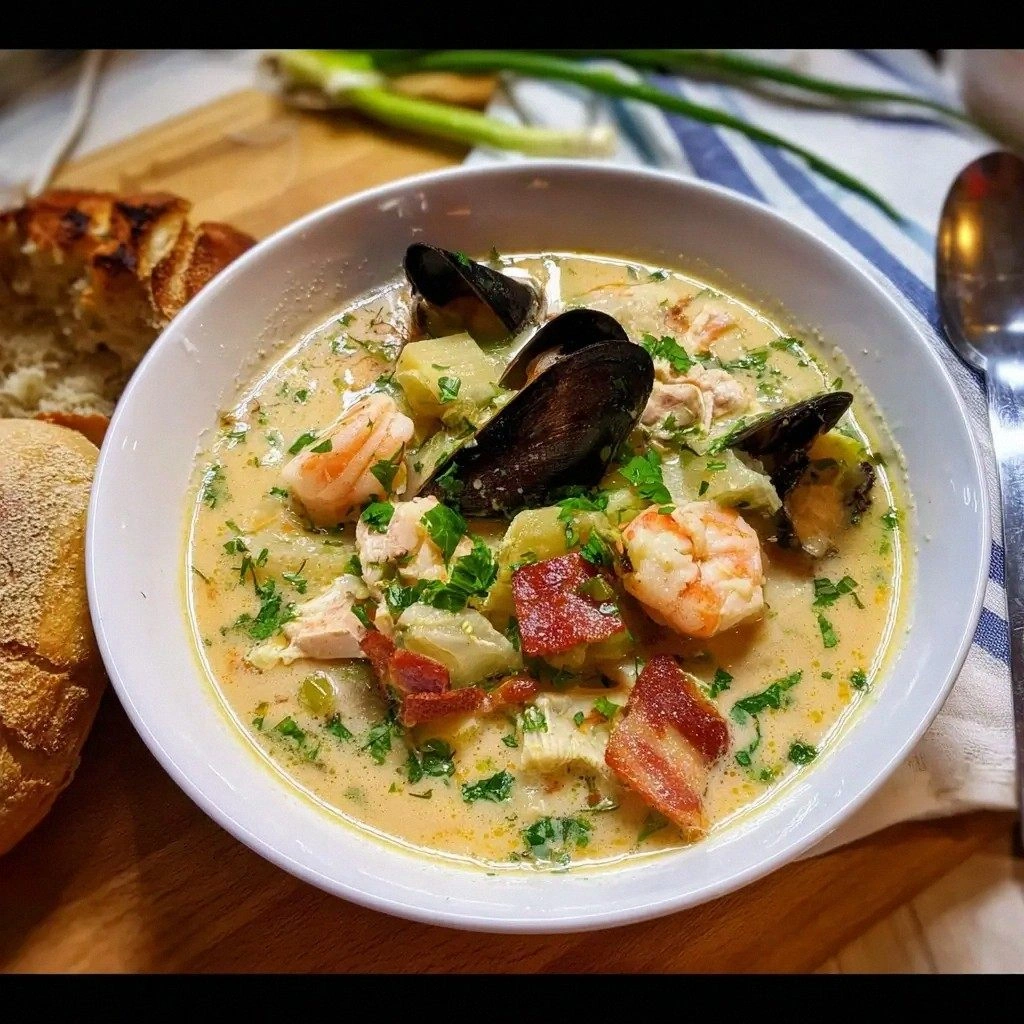
- Add the cod, scallops, mussels, and shrimp in that order. The cod and scallops need the longest cooking time, so they go first. Let the chowder simmer gently for 8–10 minutes, then add the mussels. They’ll open within 2–3 minutes; discard any that remain closed. Finally, stir in the shrimp and cook just until they turn pink, about 1–2 minutes. The shrimp are delicate; overcooking will make them rubbery.
- Season with salt, pepper, and a pinch of cayenne. Stir in the lemon juice, parsley, and adjust seasoning to taste. The lemon should brighten the broth, giving it a lively, fresh finish. Let the chowder rest for a minute before serving to allow the flavors to meld.
- Serve hot, ladling into bowls, and garnish with extra parsley if desired. Pair with crusty Irish soda bread or a simple side of buttered noodles for a complete meal. The broth should be rich, creamy, and full of briny, sweet notes, with each bite offering a new layer of flavor.
That's it — you did it. But hold on, I've got a few more tricks that'll take this to another level...
Insider Tricks for Flawless Results
The Temperature Rule Nobody Follows
Many cooks assume that a chowder should simmer at a high heat. In reality, a gentle low simmer preserves the delicate flavors of the seafood and prevents the cream from curdling. I’ve learned that a steady 180°F (82°C) is the sweet spot. If you’re using a thermometer, aim for this range; otherwise, look for small bubbles that barely break the surface.
Why Your Nose Knows Best
Before you taste the chowder, hold the pot close and inhale deeply. The aroma is a reliable indicator of doneness. If you smell a sharp, buttery scent with hints of sea, the broth is ready. If it still smells raw, give it a few more minutes. Trust your nose; it’s the ultimate judge of flavor.
The 5-Minute Rest That Changes Everything
After the chowder has finished cooking, let it rest for five minutes before serving. This short pause allows the flavors to settle and the broth to thicken slightly, creating a richer mouthfeel. I’ve seen people rush to the table and miss this simple yet transformative step.
Fresh Seafood vs. Frozen
If you’re using frozen seafood, thaw it in cold water for 15–20 minutes before adding. This prevents the fish from releasing excess moisture and becoming mushy. Fresh seafood, on the other hand, should be added whole and cooked immediately to preserve its natural texture.
The Perfect Lemon Finish
The lemon juice is the final touch that elevates this chowder. Add it just before serving to keep the citrus bright. If you prefer a milder citrus note, substitute half lemon juice with a splash of white wine. This subtle change adds a layer of sophistication without overpowering the seafood.
Creative Twists and Variations
This recipe is a playground. Here are some of my favorite ways to switch things up:
Miso‑Infused Irish Chowder
Stir in a tablespoon of white miso paste after adding the stock. The miso adds umami depth and a subtle sweetness that complements the seafood. It’s perfect for a winter dinner when you want something extra comforting.
Smoky Paprika Version
Replace the thyme with smoked paprika and add a pinch of chipotle powder. The smoky heat pairs beautifully with the mussels, creating a dish that feels like a campfire by the sea.
Vegetarian Delight
Omit the seafood and add a cup of diced butternut squash and a handful of chopped kale. Use vegetable stock instead of fish stock. The result is a hearty, plant‑based chowder that still feels like a cozy Irish meal.
Lobster Lover’s Edition
Swap the cod and scallops for fresh lobster tail pieces. Add a splash of cognac before simmering for an extra layer of flavor. This version is ideal for a special occasion.
Spicy Cajun Twist
Add a tablespoon of Cajun seasoning and a diced jalapeño to the vegetable base. The heat will cut through the richness of the cream, creating a bold, flavorful bowl.
Herb Garden Variation
Incorporate a mix of fresh herbs—dill, tarragon, and chives—into the broth. The herbs bring a bright, aromatic quality that brightens the dish and makes it feel lighter.
Storing and Bringing It Back to Life
Fridge Storage
Cool the chowder to room temperature, then transfer it to an airtight container. Store in the refrigerator for up to 3 days. The creamy texture may thicken slightly; you’ll see this in the next section.
Freezer Friendly
Divide the chowder into freezer‑safe portions and freeze for up to 2 months. Thaw overnight in the refrigerator before reheating. The seafood remains tender, and the broth stays flavorful.
Best Reheating Method
Reheat gently over low heat, stirring frequently. Add a splash of water or stock to loosen the broth if it’s become too thick. Reheating at a low temperature preserves the delicate flavors and prevents the cream from separating.