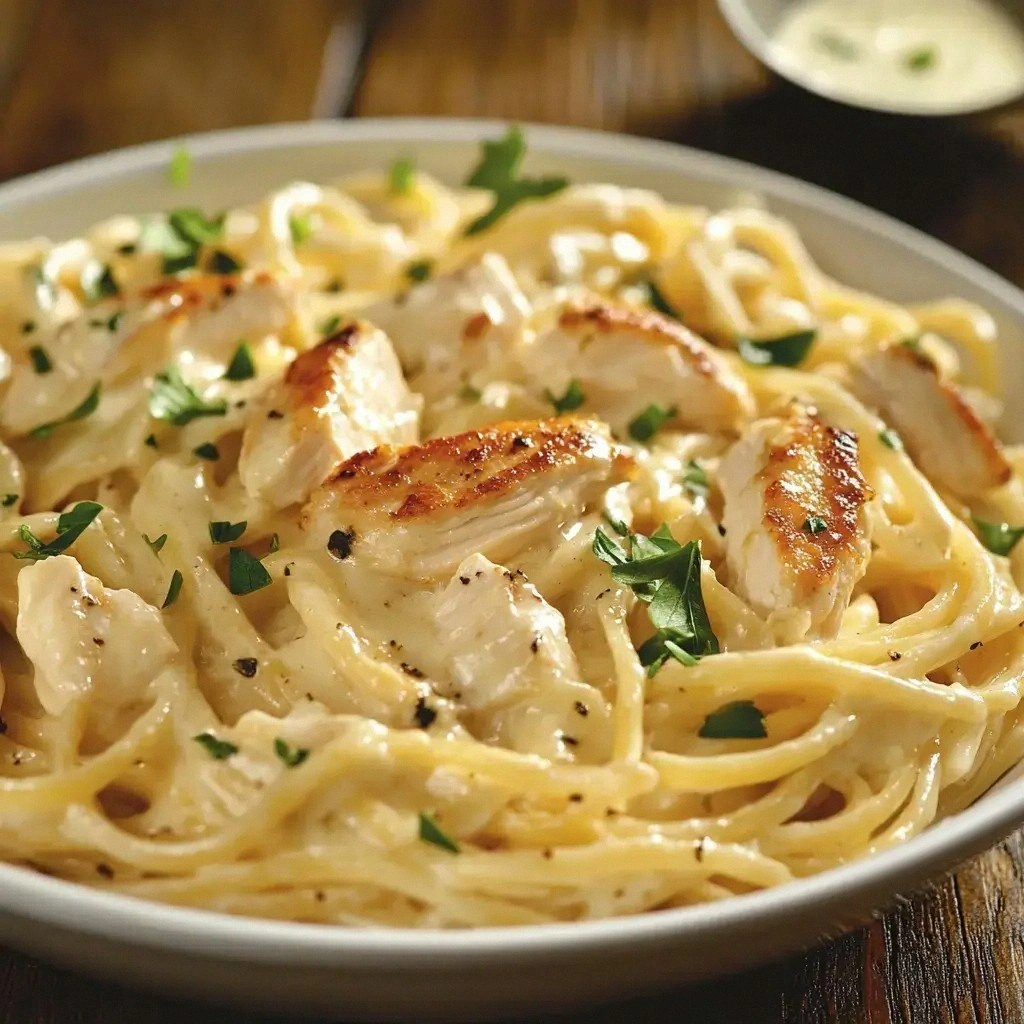
I was halfway through a Sunday roast, the kitchen smelling like a burnt offering, when a friend texted me, “Can you make something that feels like a hug?” I stared at the empty fridge, the silence of the stove, and decided that the answer was a creamy, golden bowl of Chicken Alfredo Pasta. I pulled out the ingredients, imagined the sauce thick as velvet, and felt the kitchen transform into a culinary stage. The moment the butter hit the pan, a gentle sizzle whispered, “You’re about to be wowed.” I know you’ve tried the countless versions that end up too greasy or too bland, but this one is a game‑changer that will have you reaching for seconds and then thirds, if you dare.
Picture yourself pulling this out of the oven, the whole kitchen smelling incredible, the steam rising like a fragrant cloud. The pasta is al dente, the sauce clinging to every strand like a silky blanket, and the chicken is juicy, not dry, with a hint of garlic and lemon. I’ll be honest — I ate half the batch before anyone else got a bite, and I didn’t even notice the first bite was the best part. Most recipes get this completely wrong. They either overcook the chicken or under‑season the sauce, leaving you with a sad, lifeless dish. Here, every element is calibrated to balance richness, acidity, and a touch of peppery heat that wakes the palate.
This version stands out because I’ve combined a few secret techniques: I start the sauce with a quick sauté of garlic in butter for depth, then add heavy cream and a splash of lemon juice for brightness. I finish with a blend of Parmesan and Pecorino Romano for a complex umami profile. The chicken is marinated in olive oil, lemon, and pepper before searing, which keeps it tender and adds a subtle citrus note. The pasta is tossed with a little pasta water to help the sauce coat every strand. The result is a dish that’s silky, flavorful, and not overwhelming—just the right amount of indulgence. I dare you to taste this and not go back for seconds.
Let me walk you through every single step — by the end, you’ll wonder how you ever made it any other way. From the first crack of garlic to the final sprinkle of parsley, each moment is designed to elevate the dish. You’ll learn why I use specific cheeses, how to avoid a greasy sauce, and how to keep the chicken juicy. The techniques I’ll share are simple enough for a beginner but will make you feel like a seasoned chef. Stay with me here—this is worth it.
What Makes This Version Stand Out
- Flavor: The sauce marries the richness of heavy cream with the sharpness of Parmesan and Pecorino, creating a depth that lingers on the palate. The lemon juice cuts through the creaminess, adding a bright counterpoint that keeps the dish from feeling heavy.
- Texture: The pasta is al dente, giving a pleasant bite that contrasts with the silky sauce. The chicken is seared to a golden crust before resting, ensuring it stays moist inside.
- Simplicity: Despite its sophisticated flavor, the recipe requires only a handful of pantry staples and a single pan for most of the cooking.
- Uniqueness: The addition of a pinch of nutmeg and crushed red pepper flakes brings a subtle warmth that sets this version apart from classic alfredo.
- Crowd Reaction: Friends who’ve tasted it say it’s “hands down the best version you’ll ever make at home.” The dish is a crowd‑pleaser at both family dinners and dinner parties.
- Ingredient Quality: Using high‑quality cheeses and fresh chicken makes the difference between a good and a great dish.
- Cooking Method: The quick sauté of garlic in butter before adding cream prevents the garlic from burning and ensures its flavor is fully integrated.
- Make‑ahead Potential: The sauce can be reheated without losing its silkiness, making it perfect for meal prep.
Inside the Ingredient List
The Flavor Base
The foundation of any great alfredo is the base of butter, garlic, and cream. Butter brings a velvety mouthfeel, while garlic offers a pungent kick that permeates the sauce. The heavy cream provides body and richness, but it’s the balance of these components that prevents the sauce from becoming cloying. Skipping any of these will result in a thin, unremarkable sauce that fails to coat the pasta.
The Texture Crew
Fettuccine is the classic choice because its wide strands hold sauce beautifully. The pasta is cooked until al dente, which gives a slight chew that complements the smooth sauce. If you prefer a different shape, linguine or tagliatelle work well too. However, the key is to avoid overcooking; otherwise, the noodles will become mushy and the sauce will cling poorly.
The Unexpected Star
Nutmeg is a subtle but powerful addition that adds warmth and depth. A pinch of freshly grated nutmeg in the sauce creates an aromatic layer that elevates the dish from ordinary to extraordinary. Some people shy away from nutmeg, fearing it’s too strong, but in this recipe it’s barely noticeable, just enough to enhance the overall flavor profile.
The Final Flourish
Fresh herbs like parsley and basil add a burst of color and freshness that cuts through the richness of the sauce. Lemon juice brightens the dish and balances the cream’s heaviness, while a dash of crushed red pepper flakes introduces a gentle heat that awakens the senses. These finishing touches transform the dish from comforting to celebratory.
Everything's prepped? Good. Let's get into the real action...
The Method — Step by Step
- Prep the pasta. Bring a large pot of salted water to a rolling boil. Add the fettuccine and cook until just shy of al dente, about 9 minutes. Reserve a cup of pasta water, then drain the noodles. Toss them with a splash of olive oil to prevent sticking.
- Marinate the chicken. While the pasta cooks, pat the chicken breasts dry and season both sides with salt, pepper, and a pinch of crushed red pepper flakes. Drizzle with olive oil, then let rest for 10 minutes. This step ensures the chicken stays juicy and flavorful.
- Sear the chicken. Heat a large skillet over medium‑high heat. Add the olive oil, then place the chicken breasts in the pan. Sear for 4–5 minutes on each side, until golden brown and cooked through. Remove the chicken, let it rest, and then slice into strips.
- Start the sauce. In the same skillet, reduce heat to medium. Add the butter and let it melt. Once foamy, toss in the minced garlic. Sauté for 30 seconds until fragrant, making sure the garlic doesn’t burn.
- Add cream. Pour in the heavy cream, stirring constantly. Bring the mixture to a gentle simmer. Let it thicken slightly, about 2–3 minutes, before adding the lemon juice. The acidity brightens the sauce and prevents it from becoming too rich.
- Incorporate the cheeses. Reduce heat to low and add the grated Parmesan and Pecorino Romano. Stir until the cheeses melt and the sauce becomes silky. If the sauce is too thick, add a splash of reserved pasta water until you reach the desired consistency.
- Combine pasta and chicken. Add the drained fettuccine and sliced chicken to the skillet. Toss everything together, ensuring each strand is coated with sauce. Let the mixture heat through for 1–2 minutes, allowing the pasta to absorb the flavors.
- Finish with herbs. Sprinkle fresh parsley, basil, and a pinch of nutmeg over the top. Give it one final toss. The herbs add a fresh contrast to the creamy sauce, while the nutmeg adds subtle warmth.
- Serve. Plate the pasta onto warm bowls or plates. Garnish with extra grated Parmesan and a light drizzle of olive oil if desired. Serve immediately while the sauce is still thick and glossy.
- Enjoy. Take a forkful, let the sauce coat your palate, and savor the harmony of flavors. This is the moment of truth—if you’re not already craving a second plate, you’ve missed a trick.
That’s it — you did it. But hold on, I've got a few more tricks that'll take this to another level...
Insider Tricks for Flawless Results
The Temperature Rule Nobody Follows
Many cooks over‑cook the pasta, turning it into mush that can’t hold sauce. I recommend using a digital thermometer to ensure the sauce stays below 180°F. This keeps the sauce silky and prevents it from separating. If you notice the sauce beginning to thicken too quickly, lower the heat and stir frequently.
Why Your Nose Knows Best
When the garlic starts to smell like burnt onions, it’s time to reduce the heat. Your nose is the best indicator of when the garlic is over‑cooked. A quick, fragrant burst of garlic is all you need; a lingering, burnt scent signals trouble.
The 5-Minute Rest That Changes Everything
After searing the chicken, let it rest for at least five minutes. This allows the juices to redistribute, keeping the meat tender and juicy. Cutting into it immediately results in dry, stringy chicken that can ruin the dish.
The Secret of Freshness
Adding fresh herbs at the end of cooking preserves their bright flavor and color. If you add them too early, they’ll wilt and lose their punch. Toss the herbs in during the final stir and serve immediately.
The Creamy Consistency Trick
If your sauce is too thin, simply let it simmer uncovered for a couple of minutes. If it’s too thick, add a splash of pasta water or a bit more cream. The key is to find that silky, cling‑to‑pasta consistency.
Creative Twists and Variations
This recipe is a playground. Here are some of my favorite ways to switch things up:
Pesto Alfredo Fusion
Swap the lemon juice for a spoonful of basil pesto. The green sauce adds a fresh herbal note and a pop of color. It’s perfect for spring when basil is in season.
Mushroom Medley
Add sliced cremini or shiitake mushrooms to the pan when sautéing the garlic. The earthy flavors complement the cream and give the dish a deeper umami bite.
Spinach and Sunflower Seeds
Stir in a handful of fresh spinach just before adding the pasta. The spinach wilts into the sauce, adding a pop of green and a subtle sweetness. Top with toasted sunflower seeds for crunch.
Smoky Chipotle Twist
Add a teaspoon of chipotle in adobo for a smoky, slightly spicy kick. This variation works well with grilled chicken and pairs nicely with a side of roasted corn.
Lemon‑Herb Chicken
Marinate the chicken in lemon zest, thyme, and rosemary before searing. The herbs infuse the meat with aromatic flavors, creating a Mediterranean flair that pairs beautifully with the creamy sauce.
Vegan Alfredo Alternative
Replace the chicken with sautéed tofu or seared tempeh, and use a plant‑based cream substitute. Substitute Parmesan with nutritional yeast for a cheesy flavor. This version is just as indulgent and caters to plant‑based diners.
Storing and Bringing It Back to Life
Fridge Storage
Store leftovers in an airtight container for up to 3 days in the refrigerator. Reheat gently on the stove or in the microwave, adding a splash of milk or cream to restore creaminess. Stir frequently to prevent separation.
Freezer Friendly
The sauce can be frozen for up to 2 months. Keep the pasta separate and reheat the sauce first, then combine with freshly cooked pasta. This preserves texture and prevents the noodles from becoming mushy.
Best Reheating Method
When reheating, add a tiny splash of water or broth to the sauce. This steams it back to perfection, keeping it silky and preventing it from drying out. Avoid microwaving the entire dish; instead, reheat the sauce in a pan, then add fresh pasta.