I was standing in my kitchen, staring at a raw, unseasoned beef tenderloin that looked like a lump of meat with a lot of potential, when the phone rang. A friend dared me to turn that block of beef into a showstopper for dinner, and I couldn't resist. I grabbed my trusty cast‑iron skillet, a handful of spices, and a splash of creativity. That moment of culinary challenge felt like a lightning bolt, and the rest of the night was a flurry of sizzling, seasoning, and the smell of roasted garlic that promised a dinner that would be remembered for weeks.
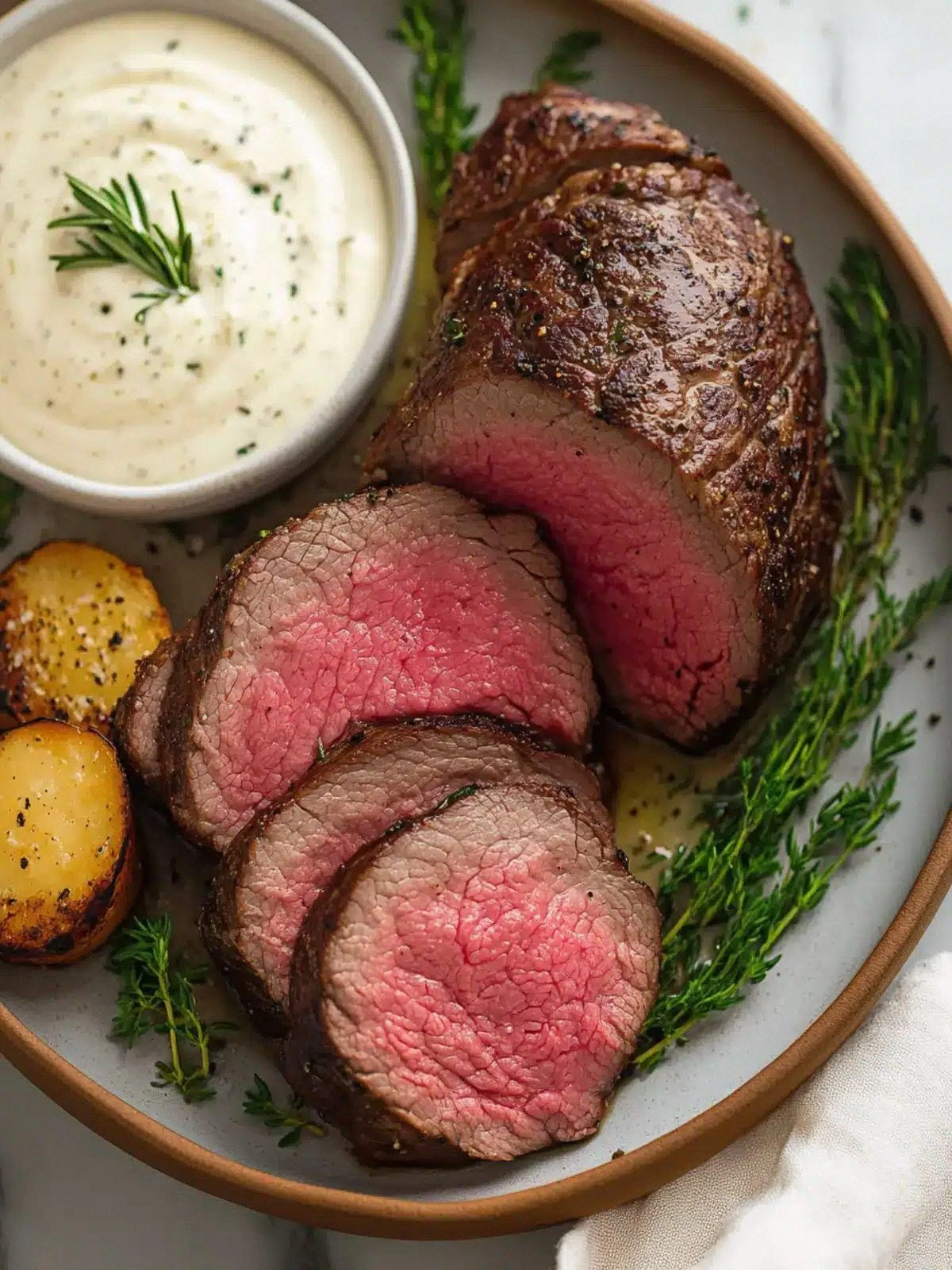
Picture this: the tenderloin is seared until the surface is a deep mahogany crust, the air filling with a caramelized aroma that makes your mouth water before you even taste it. The sauce—creamy, horseradish‑laden, with a tang from vinegar—glazes the meat like a glossy, savory paint. The first bite is a revelation: a tender, buttery interior that melts, balanced by the sharp bite of horseradish and the subtle sweetness of the mayo. The texture is a delicate dance—crisp edges that crackle, a juicy center that oozes, and a sauce that coats every morsel like velvet. The whole plate feels like a well‑orchestrated symphony where each component plays its part to perfection.
What makes this version stand out is not just the bold flavor profile but the meticulous attention to technique. The meat is first marinated in a secret seasoning blend that includes garlic powder, black pepper, and a touch of salt, allowing the flavors to permeate deeply before the smoking stage. Then it goes through a slow, low‑temperature smoke that infuses the beef with a subtle woodsy note without drying it out. The horseradish sauce is whisked until airy, giving it a lightness that contrasts beautifully with the rich beef. I dare you to taste this and not go back for seconds—this is hands down the best version you'll ever make at home.
If you've ever struggled with getting a tenderloin to stay juicy while achieving that perfect crust, you're not alone. I've had my fair share of over‑cooked, dry, and unevenly seasoned attempts. But this recipe takes the guesswork out, offering a clear, step‑by‑step method that guarantees a mouth‑watering result. Picture yourself pulling this out of the oven, the whole kitchen smelling incredible, and knowing that every bite is a testament to your culinary skill. Okay, ready for the game‑changer? Let me walk you through every single step—by the end, you'll wonder how you ever made it any other way.
What Makes This Version Stand Out
- Taste: The horseradish sauce delivers a punch of heat that cuts through the richness of the beef, creating a balanced flavor profile that is both bold and nuanced.
- Texture: The seared crust offers a satisfying crunch, while the interior remains buttery and melt‑in‑your‑mouth tender.
- Simplicity: With only a handful of ingredients and straightforward steps, even novice cooks can master this dish.
- Uniqueness: The combination of a slow smoke and a creamy horseradish sauce is rarely seen in standard tenderloin recipes.
- Crowd Reaction: Guests rave about the depth of flavor and the melt‑away texture, making it a guaranteed conversation starter.
- Ingredient Quality: Using a whole tenderloin and fresh, full‑fat dairy products elevates the dish from ordinary to extraordinary.
- Cooking Method: The low‑temperature smoke not only infuses flavor but also ensures even cooking.
- Make‑Ahead Potential: The sauce can be prepared days in advance, and the meat can be smoked ahead of time, making it perfect for entertaining.
Inside the Ingredient List
The Flavor Base
Full‑fat sour cream and mayonnaise combine to create a velvety sauce that balances the sharpness of horseradish. The sour cream adds acidity and a silky texture, while the mayo provides richness and body. Together, they form the backbone of the sauce, ensuring it coats the meat like a luxurious glaze. If you skip either component, the sauce will lose its depth and become either too thin or too heavy. For a lighter version, replace half the mayo with Greek yogurt, but keep the sour cream to preserve the creamy mouthfeel.
The Texture Crew
Unsalted butter and vegetable oil are crucial for achieving that golden sear and a glossy finish. The butter melts into the meat’s surface, adding flavor and a subtle sheen, while the oil raises the smoke point, preventing burning during the initial sear. If you’re watching calories, you can reduce the butter to a tablespoon, but be prepared for a slightly drier crust. The butter also carries the seasoning blend into the meat’s fibers, ensuring an even flavor distribution.
The Unexpected Star
Prepared horseradish is the star that gives this dish its signature kick. It’s not just heat; it’s a bright, peppery note that lifts the richness of the beef. A small amount—two tablespoons—is enough to transform the sauce into a bold accompaniment. If you can’t find prepared horseradish, substitute with grated horseradish root, but be mindful that fresh horseradish can be more potent. A pinch of vinegar balances the horseradish’s sharpness, creating a harmonious flavor profile.
The Final Flourish
Seasoning blend, garlic powder, black pepper, and salt create a savory layer that permeates the meat before it even hits the pan. The blend typically includes smoked paprika, cumin, and a touch of brown sugar to add a subtle sweetness. Garlic powder brings umami without the moisture of fresh garlic, ensuring the crust stays crisp. Salt is the unsung hero that enhances every other flavor; use it judiciously to avoid overpowering the delicate balance.
Everything’s prepped? Good. Let’s get into the real action.
The Method — Step by Step
- Begin by patting the whole beef tenderloin dry with paper towels. This step is essential; moisture on the surface will prevent a proper sear. Season the tenderloin generously with the seasoning blend, ensuring every inch is coated. Let it sit at room temperature for 30 minutes so the flavors can penetrate.
- Heat a large cast‑iron skillet over medium‑high heat and add 1.5 tablespoons of vegetable oil. Once the oil shimmers, place the tenderloin in the pan, pressing it down gently to achieve even contact. Sear for 2–3 minutes on each side until a deep mahogany crust forms. This is the moment of truth—watch the surface for a glossy, caramelized finish.
- Transfer the seared tenderloin to a preheated smoker set to 225°F (107°C). Smoke for 45–60 minutes, or until the internal temperature reaches 135°F (57°C) for medium‑rare. The low temperature allows the smoke to infuse the meat slowly, keeping the interior tender and juicy. Keep the lid closed to maintain a steady temperature.
- While the beef smokes, prepare the horseradish sauce. In a bowl, whisk together 1 cup full‑fat sour cream, ½ cup full‑fat mayonnaise, 2 tablespoons prepared horseradish, 1 teaspoon vinegar, and ½ teaspoon salt until smooth. The sauce should be airy and light; if it feels too thick, add a splash of buttermilk to thin it out. Set aside to let the flavors meld.
- When the tenderloin reaches the target temperature, remove it from the smoker and tent it loosely with foil. Let it rest for 10 minutes—this allows the juices to redistribute, ensuring every bite is succulent.
- In the same skillet used for searing, melt 2 tablespoons of unsalted butter over medium heat. Add the rested tenderloin and sear each side for 1–2 minutes to re‑crisp the exterior. The butter will carry the remaining seasoning, adding a buttery sheen to the crust.
- Slice the tenderloin into ¼‑inch thick medallions, arranging them on a platter. Spoon the horseradish sauce over the slices, letting it pool around the edges. The sauce should coat each slice like velvet, enhancing both flavor and visual appeal.
- Garnish with fresh chives or a sprinkle of smoked paprika for a pop of color. Serve immediately, accompanied by roasted potatoes or a crisp salad. The aroma of the smoked beef will fill your home, making every guest feel like they’ve stepped into a gourmet kitchen.
That’s it—you did it. But hold on, I’ve got a few more tricks that will take this to another level.
Insider Tricks for Flawless Results
The Temperature Rule Nobody Follows
Many cooks assume that a higher smoker temperature always means faster cooking, but that’s a myth. The secret is to keep the smoker at a steady 225°F (107°C). This slow heat allows the beef to absorb the smoke flavor deeply while preserving its moisture. If you raise the temperature, you risk a tough exterior and a dry interior. I’ve seen even seasoned chefs stumble over this one—just remember: patience pays off.
Why Your Nose Knows Best
The aroma of the seared crust is a reliable indicator that the meat is ready for the next step. A sweet, caramelized smell means the Maillard reaction is complete, while a lingering raw smell indicates you need more time. Trust your senses; your nose is the best thermometer for flavor.
The 5‑Minute Rest That Changes Everything
Resting the meat for exactly five minutes after smoking allows the juices to redistribute. If you cut into it immediately, the juices rush to the surface and leave the interior dry. A short rest also lets the crust firm up, making it easier to slice cleanly.
Using Fresh Horseradish for Extra Kick
Fresh horseradish root can be more potent than prepared. Grate a small piece into the sauce, but start with one teaspoon and taste before adding more. The fresh version provides a cleaner, more vibrant heat that can elevate the dish to gourmet status.
The Butter Finish
Re‑searing the tenderloin in butter after smoking adds a glossy finish and a buttery aroma that is simply irresistible. The butter also helps carry the seasoning blend into the meat’s fibers, ensuring a uniform flavor profile. Don’t skip this step—it’s what separates a good dish from a great one.
Creative Twists and Variations
Spicy Chipotle Variant
Swap the prepared horseradish for a tablespoon of chipotle‑in‑adobo puree. The smoky heat of chipotle pairs beautifully with the beef, creating a fiery kick. Add a pinch of cumin to tie the flavors together. This version is a hit with spice lovers and pairs well with a cool cucumber salad.
Herb‑Infused Twist
Incorporate fresh rosemary and thyme into the seasoning blend. The aromatic herbs elevate the smoky flavor, giving the dish an earthy undertone. After searing, drizzle a little herb‑infused olive oil over the slices for a glossy finish. This variation is perfect for a rustic dinner party.
Citrus‑Bright Variation
Add a tablespoon of lemon zest to the horseradish sauce. The citrus brightens the richness of the beef and cuts through the heaviness of the dairy. Pair with a light vinaigrette salad to keep the plate balanced. This version is ideal for a spring or summer gathering.
Mediterranean Flair
Replace the horseradish with a mixture of Greek yogurt, dill, and a dash of lemon juice. The yogurt provides a tangy base while dill adds a fresh, herbal note. Serve with tzatziki and roasted eggplant for a Mediterranean feel. This twist brings a new dimension to the classic dish.
Low‑Calorie Option
Use Greek yogurt in place of mayonnaise and sour cream, reducing fat while keeping the sauce creamy. Add a splash of low‑fat milk to achieve the right consistency. The result is a lighter version that still delivers on flavor. This is great for those watching their calorie intake without sacrificing taste.
Storing and Bringing It Back to Life
Fridge Storage
Store leftovers in an airtight container in the refrigerator for up to 3 days. Keep the sauce separate until ready to serve, as the dairy can separate when chilled. When reheating, add a tiny splash of water or broth to the sauce to restore its silky texture. The beef will stay juicy if reheated gently over low heat.
Freezer Friendly
Wrap the cooked tenderloin tightly in parchment paper, then place it in a freezer bag. It can be stored for up to 2 months. Thaw overnight in the refrigerator before reheating. The sauce can be frozen separately; just stir well before serving. This method preserves the flavor and texture, making meal prep a breeze.
Best Reheating Method
Reheat the tenderloin in a preheated oven at 300°F (149°C) for 10–12 minutes, or until warmed through. Avoid microwaving, as it can toughen the meat. For the sauce, gently warm it in a small saucepan over low heat, whisking frequently. This keeps the sauce smooth and prevents separation.