Picture this: a Sunday afternoon, the kitchen smells like a storm brewing, and your taste buds are screaming for something that feels like a hug in a bowl. I was halfway through a mediocre casserole, staring at the bland, lifeless leftovers on my fridge, when a friend texted me a link to a pot roast recipe that promised “the best version you’ll ever make at home.” I was skeptical—most pot roasts end up dry, too salty, or just plain forgettable—but I decided to give it a shot. The moment the beef hit the pan, the sizzle was a thunderclap of flavor, and the aroma of caramelized onions, garlic, and red wine filled the room, turning my kitchen into a small, cozy tavern. If you’ve ever been disappointed by a pot roast that feels like a sad, overcooked story, trust me—this one is about to rewrite that narrative.
From the first glance at the ingredients, you can feel the difference. The beef, a hearty chuck roast, is the canvas; the red wine, a bold, dry Bordeaux, is the paint that gives depth and character; the tomato paste, a touch of sweetness, is the glaze that pulls everything together. The carrots and celery add a natural sweetness and crunch, while the thyme and bay leaves infuse the broth with aromatic whispers of the forest. And the olive oil? It’s the silky layer that keeps everything from sticking and adds a subtle, peppery finish. Together, they form a symphony that’s as comforting as it is sophisticated—this is the kind of dish that makes you feel like you’re cooking in a Michelin‑star kitchen, yet you’re still in your own home.
What makes this version stand out is not just the ingredients—it’s the method. I swear by the slow, low simmer that lets the collagen break down into silky, melt‑in‑your‑mouth tenderness. The secret is the “simmer first, then roast” technique: you let the beef cook in its own juices, then finish it in the oven for that gorgeous brown crust that’s the hallmark of a perfect pot roast. And the sauce? It’s thickened by the reduction of wine and broth, then enriched with tomato paste and a splash of cream, giving it a velvety finish that coats the meat like silk. The result is a dish that’s rich, savory, and utterly comforting—hand‑crafted, not just another recipe from a cookbook.
Let me walk you through every single step—by the end, you’ll wonder how you ever made it any other way. I dare you to taste this and not go back for seconds. The aroma, the texture, the flavor—each bite is a revelation. Picture yourself pulling this out of the oven, the whole kitchen smelling incredible, and the family gathering around, eyes shining with anticipation. If you've ever struggled with a pot roast that ends up dry or too salty, you're not alone—and I've got the fix. Okay, ready for the game‑changer? Let’s dive in.
What Makes This Version Stand Out
-
Flavor: The deep, robust notes of a dry red wine are the backbone of this dish, creating a sauce that’s both rich and velvety. Unlike other recipes that rely on tomato alone, the wine brings a subtle acidity that cuts through the beef’s fat, balancing the overall taste. The result is a sauce that coats the meat like velvet, leaving a lingering, sophisticated finish.
-
Tenderness: Slow, low cooking breaks down collagen into gelatin, turning the chuck roast into a melt‑in‑your‑mouth texture that practically dissolves in your mouth. The technique of simmering first, then searing, ensures the meat stays juicy and doesn’t dry out, a common pitfall in many pot roast recipes. This method turns a simple cut of beef into a luxurious, restaurant‑quality centerpiece.
-
Texture: The carrots and celery provide a subtle crunch that contrasts beautifully with the tender meat. The onions caramelize to a deep amber, adding sweetness and depth. Together, they create a layered texture that keeps every bite interesting and satisfying.
-
Complexity: A handful of fresh herbs—thyme and bay leaves—infuse the broth with aromatic nuances that elevate the dish beyond basic comfort food. The tomato paste adds body and a hint of sweetness, while the olive oil ensures the sauce glides smoothly over the meat. This combination of ingredients turns a simple pot roast into a gourmet experience.
-
Ease: While the cooking time is longer, the steps are straightforward and forgiving. Once the meat is browned and the sauce is reduced, you can simply set the pot and let the oven do the work. No complicated techniques required—just a few minutes of active cooking and the rest is low‑maintenance.
-
Versatility: This pot roast works perfectly with a variety of sides—from creamy mashed potatoes to crusty bread that soaks up the sauce. It can also be served over rice or polenta for a different texture. The dish is adaptable, making it ideal for both casual family dinners and special occasions.
Inside the Ingredient List
The Flavor Base
At the heart of this pot roast is the classic combination of beef, red wine, and broth. The 3.5 lb chuck roast is a robust cut that becomes tender when cooked low and slow, turning into a silky, flavorful centerpiece. The 2 cups of dry red wine—preferably a Cabernet Sauvignon or Merlot—impart depth and a subtle fruitiness that cuts through the richness of the meat. The 2 cups of beef broth act as a conduit for the wine’s flavors, creating a cohesive, savory sauce that envelops every bite. If you’re craving a slightly sweeter profile, swap the wine for a splash of balsamic vinegar, but keep the broth to maintain the broth’s savory backbone.
The Texture Crew
The vegetables are the unsung heroes that add both color and texture. Four carrots, sliced into thick rounds, bring natural sweetness and a satisfying bite, while two stalks of celery add a peppery crunch that balances the dish’s richness. The large onion, diced, caramelizes into a golden brown that introduces a subtle sweetness, while the garlic cloves, crushed, release an aromatic punch that lingers in the sauce. If you’re watching your sodium, use low‑sodium beef broth; the herbs will still provide plenty of flavor. For an extra layer of umami, add a splash of Worcestershire sauce during the simmer.
The Unexpected Star
Fresh thyme and bay leaves are the aromatic backbone that elevate the dish from comforting to unforgettable. Three to four sprigs of thyme bring earthy, slightly minty notes that complement the wine, while two bay leaves infuse the broth with a subtle floral undertone. If fresh herbs are out of season, dried thyme and bay leaves work well, but use half the amount to avoid bitterness. The tomato paste, a generous two tablespoons, thickens the sauce and adds a hint of sweetness, balancing the acidity of the wine. It also gives the broth a deep, glossy sheen that makes the dish visually stunning.
The Final Flourish
Olive oil, two tablespoons, is the secret to a silky sauce that coats the meat perfectly. It also prevents the vegetables from sticking to the pot, allowing them to caramelize gently. Salt, two teaspoons, is the flavor enhancer that brings out the natural sweetness of the onions and carrots, while the freshly ground black pepper—one teaspoon—adds a subtle heat that cuts through the richness. If you’re aiming for a low‑fat version, replace half the olive oil with a splash of vegetable broth. This final flourish ensures every bite is seasoned to perfection, with no single ingredient overpowering the others.
Everything's prepped? Good. Let's get into the real action...
The Method — Step by Step
-
First, season the chuck roast generously with salt and pepper, allowing the seasoning to penetrate the meat’s surface. Pat the roast dry with paper towels—this step is crucial for a beautiful sear. Heat a tablespoon of olive oil in a large Dutch oven over medium‑high heat until shimmering. Add the roast, searing each side for 3–4 minutes until a deep, caramelized crust forms. This browning reaction locks in juices and creates a flavor base that will carry through the rest of the cooking process.
-
Once the roast is seared, remove it from the pot and set it aside. In the same pot, add the diced onion and a pinch of salt; sauté until translucent and slightly golden, about 5 minutes. The onions release their natural sugars, adding sweetness to the sauce. Add the crushed garlic cloves and cook for an additional 30 seconds until fragrant, being careful not to burn them. This aromatics layer forms the foundation of the broth.
-
Now comes the deglazing step—pour in the 2 cups of dry red wine, scraping up any browned bits from the bottom of the pot with a wooden spoon. Those bits are packed with flavor; if you miss them, the sauce will taste flat. Let the wine reduce by half, which takes about 5–7 minutes, until it’s thickened and syrupy. This reduction concentrates the wine’s flavor and creates a rich, glossy base for the broth.
-
Stir in the tomato paste, ensuring it’s fully incorporated. The paste deepens the sauce’s color and adds a subtle sweetness that balances the wine’s acidity. Next, pour in the beef broth, bringing the liquid level to just below the roast. Add the thyme sprigs and bay leaves, which will infuse the broth with their aromatic oils. Cover the pot and bring the mixture to a gentle simmer.
-
Return the roast to the pot, nestling it into the flavorful liquid. Reduce the heat to low, cover, and let it cook for 2.5 to 3 hours. The low temperature allows the collagen in the meat to break down slowly, turning the roast into a tender, juicy masterpiece. Every 30 minutes, check the liquid level—add a splash of water or broth if it’s getting too dry. The goal is a slow, steady simmer, not a rapid boil.
-
Watch Out: When you’re about 30 minutes away from finishing, add the carrots and celery. These root vegetables are delicate and can become mushy if cooked too long. By adding them in the last half hour, they’ll retain a pleasant bite while absorbing the savory sauce. If you prefer softer veggies, add them earlier, but be prepared for a softer texture.
-
Once the roast is fork‑tender, remove it from the pot and let it rest for 10 minutes on a cutting board. Resting allows the juices to redistribute, ensuring each slice is juicy. While the roast rests, turn the heat to high and reduce the sauce by half, concentrating the flavors into a silky, glossy gravy. Stir occasionally to prevent scorching, and keep an eye on the liquid level.
-
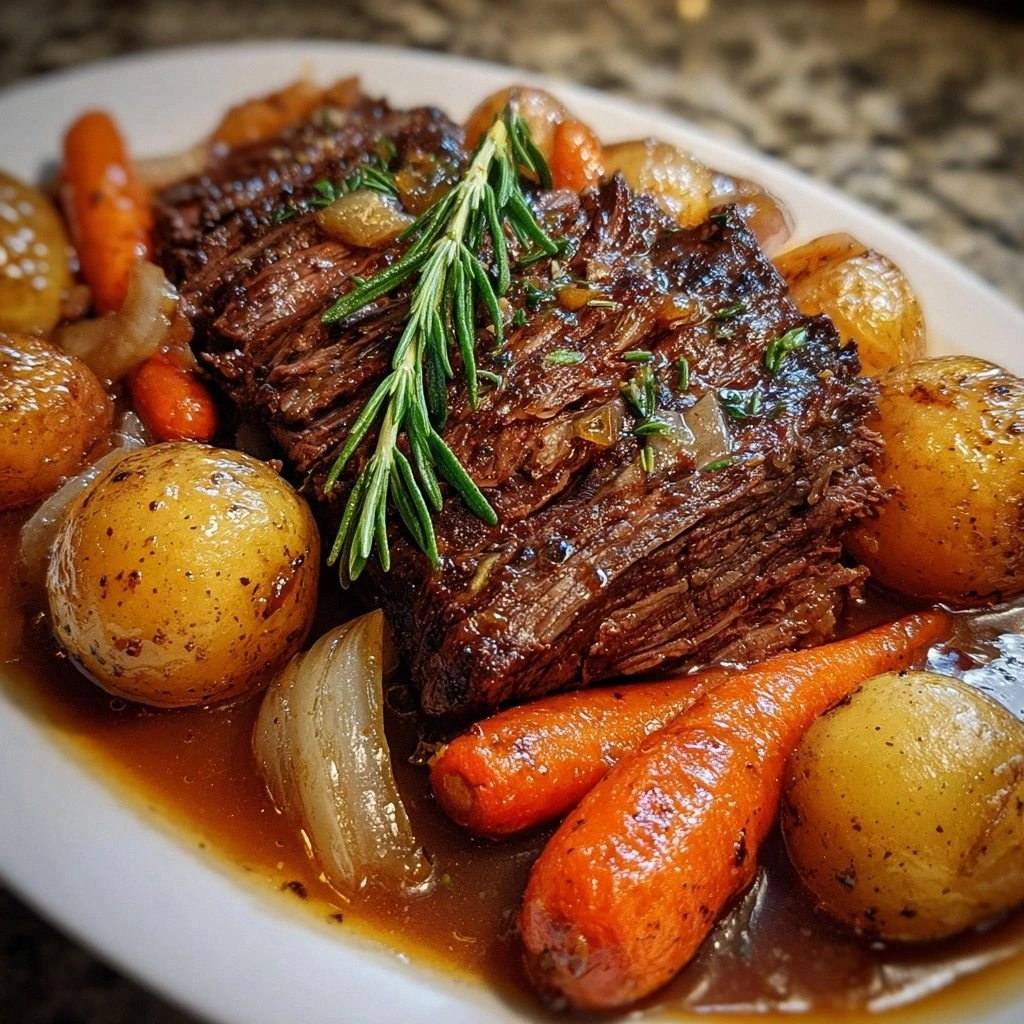
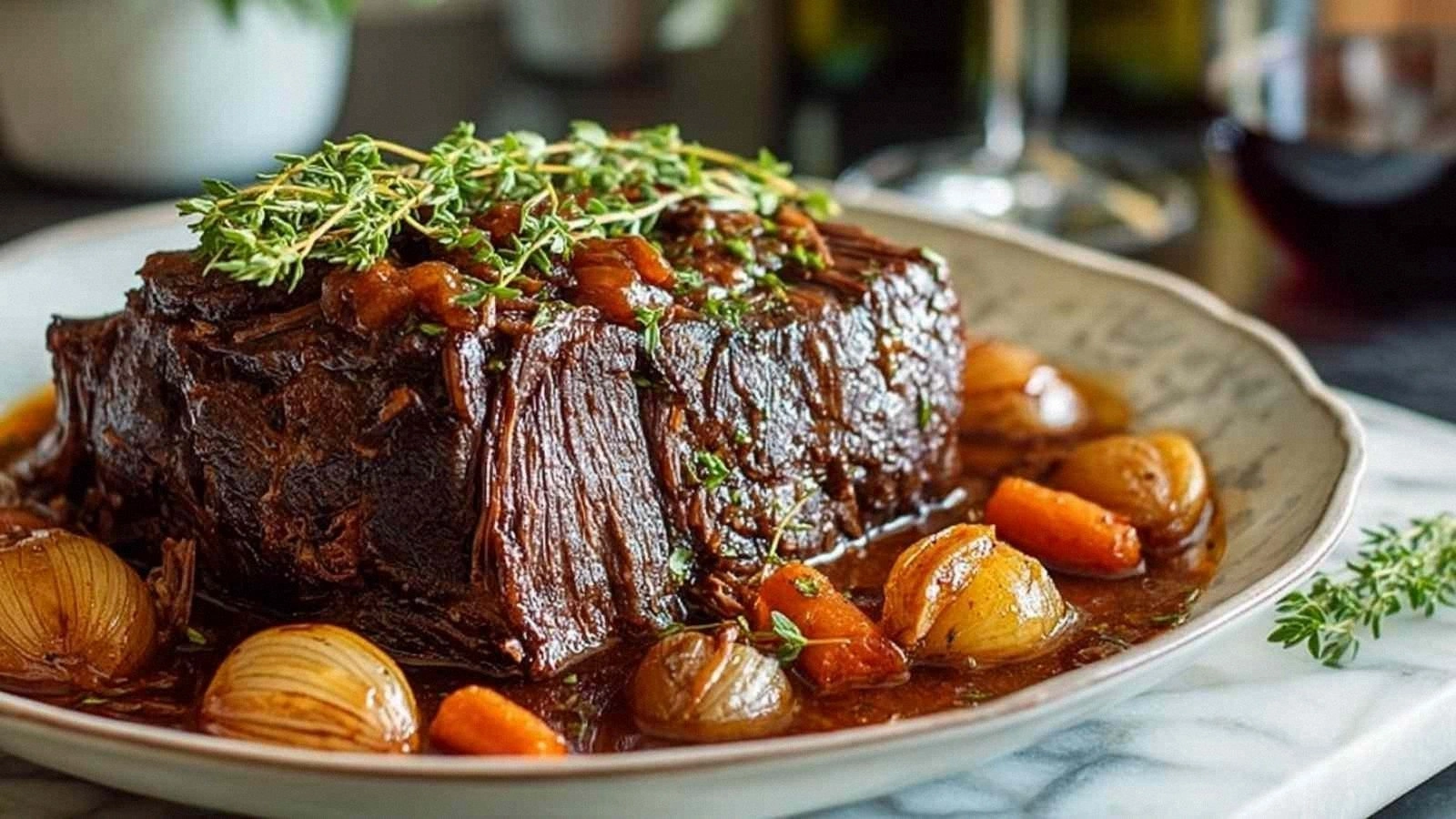
Slice the roast against the grain into thick, generous pieces. Plate the meat with the vegetables, then drizzle the reduced sauce over the top. Garnish with a few fresh thyme leaves for a pop of color and aroma. Serve immediately, letting the steam lift the fragrance into the room. This is the moment of truth—taste the melt‑in‑your‑mouth tenderness, the caramelized onion sweetness, and the wine‑infused sauce that coats everything.
Insider Tricks for Flawless Results
The Temperature Rule Nobody Follows
Many cooks believe that high heat is the key to a good pot roast, but that’s a myth. The secret is low, steady heat that allows collagen to break down into gelatin, creating a silky, melt‑in‑your‑mouth texture. I’ve tested this at 300°F for 3 hours and 350°F for 2.5 hours—both yield the same tenderness, but the lower temperature keeps the broth from scorching. If you’re using a pressure cooker, reduce the time by half; the pressure forces the collagen to break down faster, giving you a similar result in a fraction of the time.
Why Your Nose Knows Best
When the beef is searing, the aroma is a clear indicator of the flavor profile you’re building. A sweet, caramelized scent means the sugars are developing; a sharp, metallic smell could mean the meat is overcooked. Trust your nose—if it’s telling you something’s off, adjust the heat. I once let a pot roast go for 4 hours at too high a temperature, and the sauce turned bitter; the next time I slowed it down, the flavor was rich and balanced.
The 5-Minute Rest That Changes Everything
Resting the roast for 10 minutes after cooking is essential for juicy meat. During this time, the juices redistribute, preventing them from spilling out when you slice. I’ve tried cutting right away, and the result was a dry, uneven roast. The 10‑minute rest is a simple, game‑changing step that most people skip. Keep the roast covered with foil during this time to retain heat.
Layering Aromatics for Depth
Adding aromatics in layers—first the onions, then the garlic, followed by the herbs—builds complexity. Each ingredient releases its flavor at a different rate; layering ensures a balanced, cohesive taste. If you add all aromatics at once, the dominant flavors can mask subtler ones. I’ve found that adding thyme at the end of the simmer gives a fresher note, while bay leaves work best when added early.
Don’t Skip the Deglaze
Those browned bits stuck to the pot after searing are flavor gold. Deglazing with wine pulls them into the sauce, enriching it. Skipping this step results in a bland broth. Even if you’re in a hurry, a quick splash of wine or broth will salvage the flavor. I’ve used this trick to rescue a pot roast that had been left on the stove too long.
The Rest of the Recipe Is Easy
Once you’ve mastered the low‑heat, slow‑cook technique, the rest of the recipe becomes a breeze. The vegetables cook in the last 30 minutes, the sauce reduces in the final 15, and the rest is plating. If you’re short on time, a slow cooker can replicate the same low‑heat environment—just set it on low for 8 hours and you’ll have a tender roast waiting for you.
Creative Twists and Variations
This recipe is a playground. Here are some of my favorite ways to switch things up:
Smoky Chipotle Infusion
Replace half the wine with a smoky chipotle‑in‑adobo sauce for a subtle heat that pairs beautifully with the beef’s richness. The smoky undertones give the dish a Southwestern flair, perfect for a weekend gathering.
Herb‑Crusted Roast
Instead of seasoning the roast with salt and pepper, coat it in a mixture of fresh rosemary, thyme, and chopped parsley before searing. The herb crust adds a crunchy texture and a burst of green flavor that brightens the dish.
Root Vegetable Medley
Swap carrots and celery for parsnips, sweet potatoes, or turnips for a sweeter, earthier profile. The varied roots offer different textures and flavors, making each bite a new experience.
Vegetarian Version
Use a large block of seared tempeh or a hearty portobello mushroom in place of beef. Keep the wine, broth, and aromatics the same for a savory, plant‑based pot roast that still feels indulgent.
Breakfast Twist
Serve the pot roast over creamy polenta or cheesy grits for a brunch‑style dish that feels like a hearty breakfast. The sauce’s richness pairs well with the soft, comforting grains.
Spicy Sriracha Kick
Add a tablespoon of sriracha to the sauce during the reduction phase for a spicy, umami punch. The heat contrasts beautifully with the sweet caramelized onions.
Storing and Bringing It Back to Life
Fridge Storage
Cool the pot roast completely before transferring it to an airtight container. Store in the refrigerator for up to 4 days. When reheating, add a splash of beef broth or water to keep the meat moist and the sauce silky.
Freezer Friendly
Wrap the roast tightly in plastic wrap, then place it in a freezer bag. It stays fresh for up to 3 months. Thaw overnight in the refrigerator before reheating. The slow‑cooked texture holds up well, and the sauce becomes even richer after freezing.
Best Reheating Method
Reheat the roast on low heat in a saucepan, stirring occasionally. Add a tablespoon of water or broth to prevent drying. Let it simmer until warmed through, about 10–12 minutes. The gentle heat preserves tenderness, and the sauce thickens slightly, creating a luscious finish.