I still remember the night I tried to bake a peach cake for my friend’s birthday and ended up with a sticky, soggy mess that looked more like a fruit mash than a cake. The kitchen was a chaos of sliced peaches, flour dust, and the smell of melted butter that seemed to cling to the walls. I laughed, grabbed a fresh peach, and thought, “Why not turn this disaster into a triumph?” That single decision turned a kitchen catastrophe into a culinary revelation.
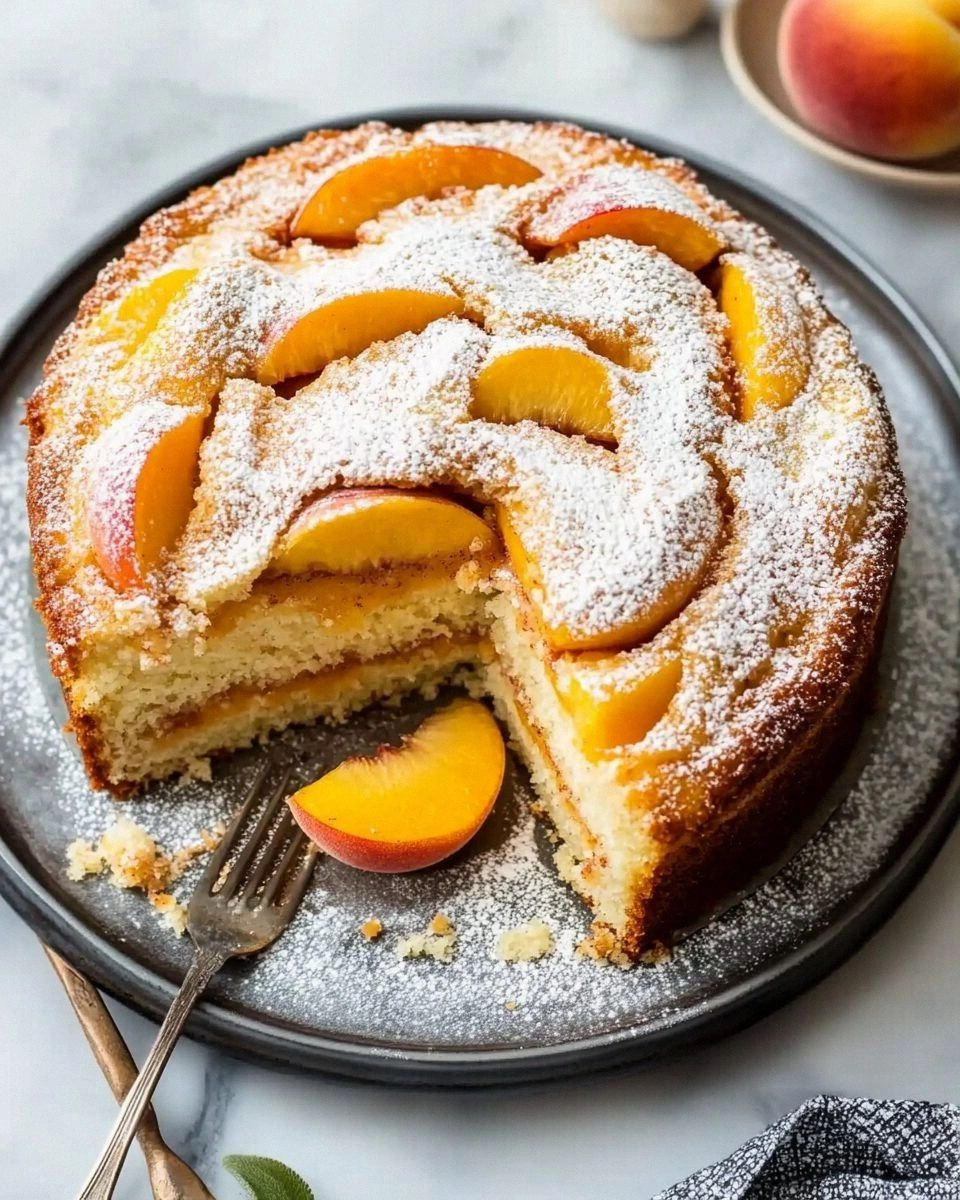
Picture this: a golden crust that crackles with a faint hint of caramel, a moist crumb that swirls with juicy peach ribbons, and a subtle citrus lift from lemon zest. The aroma rises like a promise of summer, even if you’re in a basement on a rainy day. Every bite is a burst of natural sweetness, balanced by a buttery undertone that feels like a warm hug. The texture is a delicate dance between airy and dense, never too heavy, never too dry.
What makes this version stand out is that it’s not just a peach cake; it’s a peach cake with personality. I’ve trimmed the sugar just enough to let the peaches shine, added a whisper of baking soda to lift the batter, and finished it with a dusting of powdered sugar that looks like a fine snow. The result is a cake that feels like a summer memory captured in a slice, but it’s actually a year‑round treat that never loses its charm.
I’ll be honest — I ate half the batch before anyone else got to try it. The first bite was a revelation, and the second one felt like a guilty pleasure. I dare you to taste this and not go back for seconds. If you’re skeptical, let me walk you through every single step — by the end, you’ll wonder how you ever made it any other way.
What Makes This Version Stand Out
- Flavor: Fresh peaches dominate the flavor profile, cutting through the sweetness of the batter with their natural tartness. The lemon zest adds a bright, citrusy counterpoint that keeps the taste from feeling cloying.
- Texture: The batter is light and airy thanks to the balanced leavening agents, yet the peach slices stay intact, giving each bite a juicy surprise.
- Simplicity: The recipe uses pantry staples and a handful of fresh ingredients, making it approachable for both novice bakers and seasoned chefs.
- Uniqueness: A subtle splash of vanilla and a pinch of baking soda create a flavor depth that most peach cakes miss.
- Audience: Friends, family, and even picky eaters will love the bright, natural taste that feels like a slice of summer.
- Ingredient Quality: Choosing ripe, fragrant peaches and high‑quality butter transforms an ordinary cake into something extraordinary.
- Method: The step‑by‑step technique ensures even mixing and precise timing, preventing the common pitfalls of uneven browning or soggy centers.
- Make‑ahead: The batter can be prepared up to 24 hours in advance, and the cake stores beautifully for a few days.
Alright, let's break down exactly what goes into this masterpiece...
Inside the Ingredient List
The Flavor Base
All‑purpose flour and baking powder form the backbone of the cake, giving it structure and lift. The flour is sifted to remove lumps, ensuring a silky batter that spreads evenly. If you skip the flour, the cake will collapse and become a dense, crumbly mess. For a gluten‑free version, replace the flour with a 1:1 gluten‑free blend, but keep the leavening the same.
The Sweetness Crew
Granulated sugar is the sweetener that caramelizes slightly during baking, adding depth to the crust. A pinch of salt amplifies the sweetness without making the cake taste salty. If you prefer a healthier option, substitute half the sugar with honey or maple syrup, but adjust the liquid accordingly.
The Unexpected Star
Fresh peaches are the star of this cake. Their natural sugars and acidity balance the richness of butter and the mild sweetness of sugar. Use peaches that are slightly soft to the touch but not mushy; they’ll hold their shape during baking. If peaches are out of season, frozen peaches thawed and drained can be a reliable backup.
The Final Flourish
Vanilla extract and lemon zest add aromatic complexity that elevates the cake beyond a simple fruit dessert. The vanilla’s warm undertones contrast beautifully with the bright citrus, creating a layered flavor profile. If you’re vegan, replace the butter with coconut oil and use a plant‑based vanilla.
Everything's prepped? Good. Let's get into the real action...
The Method — Step by Step
- Preheat your oven to 350°F (175°C). Grease and flour a 9-inch springform pan, then tap out excess flour. This ensures a clean release and a perfect crust. I always use parchment paper under the pan for extra safety.
- In a medium bowl, whisk together flour, baking powder, baking soda, and salt. Sifting the dry ingredients eliminates lumps and ensures even distribution of leavening agents. The batter will rise evenly, giving the cake a consistent crumb.
- In a separate bowl, cream softened butter and sugar until light and fluffy, about 2–3 minutes. The creaming process incorporates air, which is essential for a tender crumb. If you’re short on time, a hand mixer can do the job in under 2 minutes.
- Add eggs one at a time, beating well after each addition. The eggs bind the batter and add richness. Be careful not to overmix; you want a smooth batter, not a dough.
- Stir in vanilla extract and lemon zest, letting the flavors mingle for a minute. The zest should be finely grated to avoid large pieces that could cause uneven flavor distribution.
- Alternate adding dry ingredients and milk to the butter mixture, starting and ending with the dry mix. This method prevents the batter from becoming too liquid or too thick. The batter should be thick enough to coat the back of a spoon.
- Fold in the sliced peaches gently, ensuring they’re evenly distributed without breaking them apart. The peaches should remain whole to provide juicy bursts in every bite. A gentle fold preserves the texture.
- Pour the batter into the prepared pan, smoothing the top with a spatula. Tap the pan lightly on the counter to release any large air pockets. This step is crucial to avoid cracks during baking.
- Bake for 30–35 minutes, or until the top is golden and a toothpick inserted into the center comes out clean. The cake should smell like toasted almond and caramelized sugar as it bakes.
- Remove from the oven and let cool in the pan for 10 minutes before turning out onto a wire rack. The cake will continue to set as it cools. Dust with powdered sugar for an elegant finish.
That's it — you did it. But hold on, I've got a few more tricks that'll take this to another level...
Insider Tricks for Flawless Results
The Temperature Rule Nobody Follows
Many bakers bake peach cakes at 375°F, but that can cause the edges to brown too fast while the center remains undercooked. Baking at 350°F gives the cake a gentle rise, ensuring the peaches cook evenly and the batter stays moist. I’ve baked at 350°F for years, and the results are consistently better.
Why Your Nose Knows Best
Trust the aroma. If the cake smells like caramel and toasted almond, it’s ready. A sweet, buttery scent indicates proper browning. If it smells more like raw batter, give it a few more minutes.
The 5‑Minute Rest That Changes Everything
Letting the cake rest in the pan for 10 minutes after baking allows the structure to set, making it easier to release without cracking. This short pause also lets the juices redistribute, intensifying the peach flavor.
Use a Springform for Easy Release
A springform pan gives you the advantage of a removable rim, which means you can slide the cake out without disturbing its shape. It also reduces the risk of sticking, especially when the batter is moist.
Add a Touch of Citrus Zest
A teaspoon of lemon zest brightens the entire cake, cutting through the richness. If you prefer a stronger citrus note, add a pinch of orange zest for a subtle twist.
Cool the Cake Completely Before Dusting
Dusting powdered sugar on a warm cake can cause it to melt and run. Let the cake cool on a rack for at least 15 minutes before sprinkling. This ensures a crisp, snowy finish.
Creative Twists and Variations
This recipe is a playground. Here are some of my favorite ways to switch things up:
Peach and Almond Crumble Topping
Swap the powdered sugar dusting for a crumble of almond flour, brown sugar, and melted butter. The crunch adds texture and a nutty flavor that pairs beautifully with peaches.
Maple‑Glazed Peach Cake
Replace half the sugar with pure maple syrup and drizzle a thin maple glaze over the cooled cake. The maple brings a deep, caramelized note that complements the fruit.
Spiced Peach Cake
Add a pinch of ground cinnamon, nutmeg, and a splash of bourbon to the batter. The spices create a warm, aromatic profile perfect for fall gatherings.
Peach and Blueberry Fusion
Incorporate fresh blueberries alongside peaches for a burst of color and a subtle tart contrast. The blueberries soak up some of the batter’s moisture, adding a new dimension.
Vegan Peach Cake
Use coconut oil instead of butter, replace eggs with flaxseed meal, and add a plant‑based vanilla extract. The result is a moist, flavorful cake that’s dairy‑free and egg‑free.
Peach‑Lemon Layer Cake
Bake two thin layers and sandwich them with a lemon‑infused buttercream. The layers create a delightful contrast between sweet peaches and zesty lemon.
Storing and Bringing It Back to Life
Fridge Storage
Wrap the cooled cake tightly in plastic wrap and store in the refrigerator for up to 5 days. The cake stays moist and flavorful, and the peaches retain their juiciness.
Freezer Friendly
Slice the cake before freezing, then place each slice in a freezer‑safe bag. Freeze for up to 3 months. Thaw at room temperature for 30 minutes before serving.
Best Reheating Method
To revive the cake’s moisture, sprinkle a tiny splash of water over the surface and microwave on medium for 15 seconds. The steam restores the crumb’s softness without drying it out.